7 Effective Hair Loss Treatment in Pala: Restore Hair Health
Hair loss can affect people of different ages and may develop gradually or suddenly. Finding the right hair loss treatment in Pala starts with understanding why hair is falling and whether the problem is temporary or ongoing. Hair shedding can be related to genetics, hormonal changes, nutritional deficiencies, stress, scalp conditions, medications, or certain health problems. A proper evaluation can help identify the underlying cause and guide suitable treatment.
Normal hair shedding is part of the natural hair growth cycle. However, noticeable thinning, widening of the hair part, receding hairline, or bald patches may indicate excessive hair loss. Early assessment can be useful because some causes respond better when addressed promptly.
What Is Hair Loss
Hair loss refers to excessive shedding or a reduction in the amount of hair growing on the scalp. It can affect the scalp completely or appear in specific areas.
A person may notice:
- More hair on the pillow or comb
- Increased hair fall while washing
- Gradual thinning of scalp hair
- A widening centre part
- Receding hairline
- Visible scalp
- Small or large bald patches
- Reduced hair density
The pattern and speed of hair loss can provide important clues about its possible cause.
Common Causes of Hair Loss
Several factors can contribute to hair thinning and excessive shedding. Identifying the cause is an important part of choosing appropriate hair loss treatment in Pala.
Genetic Hair Loss
Androgenetic alopecia is one of the most common forms of hair loss. It can affect both men and women and usually develops gradually. Men may experience a receding hairline or thinning at the crown, while women may notice overall thinning or a widening part.
Hormonal Changes
Hormonal fluctuations can influence the hair growth cycle. Changes associated with pregnancy, menopause, thyroid disorders, or other hormonal conditions may contribute to increased shedding.
Nutritional Deficiencies
Insufficient intake or absorption of certain nutrients can affect healthy hair growth. Iron, vitamin D, vitamin B12, zinc, protein, and other nutrients may be relevant depending on an individual’s circumstances.
Stress and Illness
Physical or emotional stress can sometimes cause temporary increased hair shedding. Fever, major illness, surgery, rapid weight loss, and other significant stressors may also affect the normal hair cycle.
Scalp Conditions
Dandruff, inflammation, fungal infections, psoriasis, and other scalp disorders can affect hair health. Treating the scalp condition may be an important part of managing associated hair loss.
Hair Care Practices
Frequent chemical treatments, excessive heat styling, tight hairstyles, and repeated pulling can damage the hair shaft or contribute to traction-related hair loss.
Types of Hair Loss
Different types of hair loss require different approaches. A healthcare professional may assess the pattern, duration, scalp condition, and other symptoms before recommending treatment.
Androgenetic Alopecia
This is commonly known as pattern hair loss. It tends to progress gradually and is strongly influenced by genetics and hormonal factors.
Telogen Effluvium
Telogen effluvium can cause increased hair shedding several weeks or months after a significant physical or emotional trigger. The condition may improve when the underlying trigger is identified and addressed.
Alopecia Areata
Alopecia areata is an autoimmune-related condition that can cause clearly defined patches of hair loss. It may affect the scalp, eyebrows, beard, or other hair-bearing areas.
Traction Alopecia
Repeated tension from tight hairstyles can damage hair follicles over time. Early changes may be reversible, while prolonged traction can result in more persistent hair loss.
Symptoms That May Need Attention
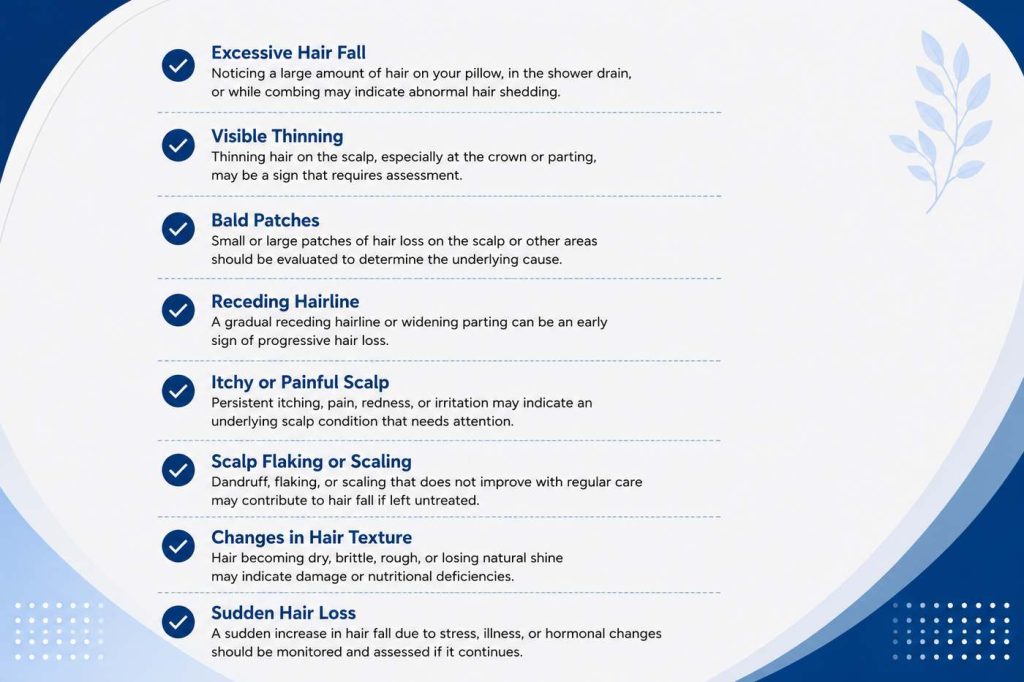
Hair loss does not always occur in the same way. Some people experience gradual thinning, while others develop sudden shedding or distinct bald patches.
Signs worth discussing with a professional include:
- Sudden or severe hair shedding
- Hair loss occurring in patches
- Rapidly increasing scalp visibility
- Receding hairline
- Persistent scalp itching or scaling
- Redness, pain, or inflammation
- Hair breakage combined with thinning
- Loss of eyebrows or eyelashes
- Hair loss accompanied by other unexplained symptoms
Recognising these signs early may help determine whether further evaluation is appropriate.
How Is Hair Loss Evaluated
A detailed evaluation usually begins with questions about the person’s hair loss pattern, medical history, family history, diet, lifestyle, medications, recent illness, and other possible triggers.
The scalp and hair may also be examined to identify:
- Hair density and distribution
- Hair shaft changes
- Signs of inflammation
- Scalp scaling or infection
- Broken hairs
- Bald patches
- Changes around hair follicles
Depending on the findings, laboratory investigations may sometimes be recommended. These can help identify nutritional deficiencies, thyroid-related problems, hormonal concerns, or other conditions that may contribute to hair shedding.
Hair Loss Treatment Options
The most suitable hair loss treatment in Pala depends on the underlying cause, severity, age, overall health, and pattern of hair loss. There is no single treatment that works for every person.
Topical Treatments
Certain topical medications may help some forms of pattern hair loss. They are generally used consistently over time and may require continued use to maintain results.
Oral Medications
Specific oral medicines may be considered for selected patients. Their suitability depends on factors such as age, sex, medical history, potential side effects, and the cause of hair loss.
Treatment for Nutritional Deficiencies
When testing identifies a nutritional deficiency, correcting it under professional guidance may support normal hair growth. Supplements should not be taken unnecessarily because excessive intake of certain nutrients can also cause problems.
Treatment for Scalp Conditions
If hair loss is associated with inflammation, infection, or another scalp disorder, treating the underlying scalp condition may help improve the hair environment.
Platelet-Based Procedures
Some clinics offer platelet-based procedures for selected types of hair loss. These treatments use components derived from the individual’s own blood and are intended to support the hair follicles. Their suitability and expected results vary between individuals.
Hair Transplantation
For selected cases of permanent pattern hair loss, hair transplantation may be considered. The procedure involves moving hair follicles from a donor area to areas affected by thinning or baldness. Proper assessment is important before deciding whether transplantation is appropriate.
Benefits of Early Hair Loss Management
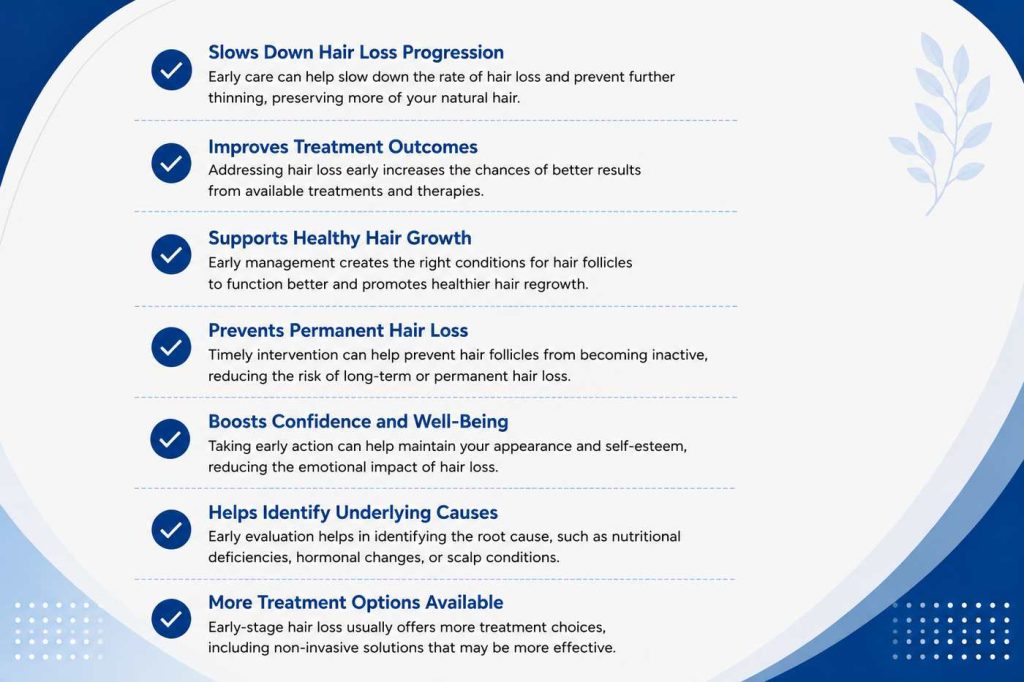
Starting an appropriate hair loss treatment in Pala after identifying the cause may provide several potential advantages.
These can include:
- Identifying treatable causes earlier
- Reducing avoidable hair damage
- Managing scalp conditions
- Supporting healthier hair growth
- Preventing certain forms of progressive hair loss from worsening
- Developing a personalised hair-care approach
- Setting realistic expectations about treatment results
Treatment outcomes depend greatly on the cause and stage of hair loss. Some conditions can improve significantly, while others require long-term management.
Tips for Supporting Healthy Hair
Professional treatment is only one part of maintaining healthy hair. Everyday habits can also help reduce unnecessary damage.
Choose Gentle Hair Care
Use a mild shampoo appropriate for your scalp and avoid excessive scrubbing. Wash the hair according to your scalp’s needs rather than following a fixed schedule.
Avoid Excessive Heat
Frequent use of straighteners, curling irons, and high-temperature blow drying can weaken the hair shaft. Use lower heat settings where possible.
Avoid Tight Hairstyles
Repeatedly pulling hair into very tight ponytails, buns, braids, or similar styles may increase tension on the follicles.
Maintain Balanced Nutrition
A balanced diet containing adequate protein, fruits, vegetables, whole grains, and other nutrient-rich foods supports overall hair health.
Manage Stress
Stress management through regular physical activity, sufficient sleep, relaxation techniques, and healthy routines may support general wellbeing and healthy hair cycling.
What Should You Expect From Treatment
Hair does not grow overnight, so most hair loss treatments require patience and consistency. The hair growth cycle means that visible changes may take several months.
Treatment expectations depend on:
- The type of hair loss
- How long the condition has been present
- The health of the hair follicles
- The selected treatment
- Individual response
- Consistency with the recommended plan
It is important to avoid products or treatments that promise guaranteed or extremely rapid results. A personalised assessment provides a more reliable basis for deciding what may be appropriate.
When Should You Seek Professional Advice
Consider seeking professional evaluation when hair loss becomes persistent, noticeable, or progressively worse. Sudden hair loss, bald patches, scalp inflammation, or hair loss involving other body areas may also warrant assessment.
Professional guidance can help distinguish between temporary shedding and conditions that require specific management. It can also prevent unnecessary use of supplements, medications, or cosmetic products that may not address the underlying cause.
Conclusion
Hair loss can have many different causes, and identifying the underlying problem is an important first step toward appropriate management. From genetic hair thinning and hormonal changes to nutritional deficiencies, stress, scalp disorders, and damaging hair practices, the right approach depends on the individual.
If you are noticing persistent thinning, excessive shedding, or bald patches, professional evaluation can help determine whether treatment is needed. Understanding the cause also makes it easier to choose appropriate options and avoid ineffective remedies. With timely assessment, suitable care, and consistent hair-health habits, people seeking hair loss treatment in Pala can make informed decisions about managing hair loss and supporting healthier-looking hair. For reliable information on hair loss causes and treatment options, you can refer to the MedlinePlus – Hair Loss.