7 Proven Tips for Choosing a Hair Fall Doctor in Pala Today
Hair loss is a common concern that can affect people of different ages and may occur for many different reasons. If shedding becomes excessive, the hairline starts changing, or thinning becomes noticeable, professional evaluation can help identify the underlying cause. Finding the right hair fall doctor in Pala can be an important step toward understanding why hair loss is happening and choosing an appropriate treatment approach.
Hair fall should not always be considered a normal part of daily life. Losing some hair each day can be expected, but persistent or excessive shedding may indicate nutritional deficiencies, hormonal changes, scalp conditions, stress, genetics, medications, or other underlying factors.
When Should You Consult a Hair Fall Doctor
Occasional hair shedding is usually not a reason for concern. However, professional evaluation may be useful when hair loss becomes persistent, sudden, or visibly progressive.
Consider seeking medical advice if you notice:
- Increased hair shedding while washing or brushing
- Visible thinning across the scalp
- A widening hair part
- Receding hairline
- Bald patches
- Thinning around the crown
- Significant changes in hair density
- Scalp itching, scaling, redness, or inflammation
- Hair breakage that does not improve with routine care
- Sudden hair loss following an illness, major stress, or dietary change
Early assessment can help distinguish temporary shedding from conditions that may require treatment.
What Causes Excessive Hair Fall
Hair loss can have one or several contributing factors. Identifying the cause is often more important than simply treating the visible symptom.
Genetic Hair Loss
Genetic or hereditary hair loss is one of the most common causes of progressive thinning. It may gradually affect the hairline, crown, or overall scalp density.
The pattern and progression can vary between individuals. Early evaluation may help determine whether the thinning follows a recognizable hereditary pattern.
Nutritional Deficiencies
Hair growth requires adequate nutrients. Insufficient intake or absorption of certain nutrients may contribute to increased shedding.
Potential nutritional factors can include:
- Iron
- Protein
- Vitamin D
- Vitamin B12
- Zinc
- Other essential nutrients
Testing may be recommended when nutritional deficiency is suspected.
Hormonal Changes
Hormonal fluctuations can affect the hair growth cycle. Changes associated with thyroid disorders, pregnancy, menopause, or other endocrine conditions may contribute to shedding.
A healthcare professional can determine whether hormonal evaluation is appropriate based on symptoms and medical history.
Stress and Illness
Physical or emotional stress can sometimes trigger increased hair shedding. High fever, significant illness, surgery, rapid weight loss, or prolonged stress may temporarily disrupt the normal hair growth cycle.
Scalp Conditions
Scalp inflammation, infections, severe dandruff, psoriasis, and other dermatological conditions can affect hair health. Treating the underlying scalp problem may be an important part of managing associated hair loss.
What Types of Hair Loss Can Occur
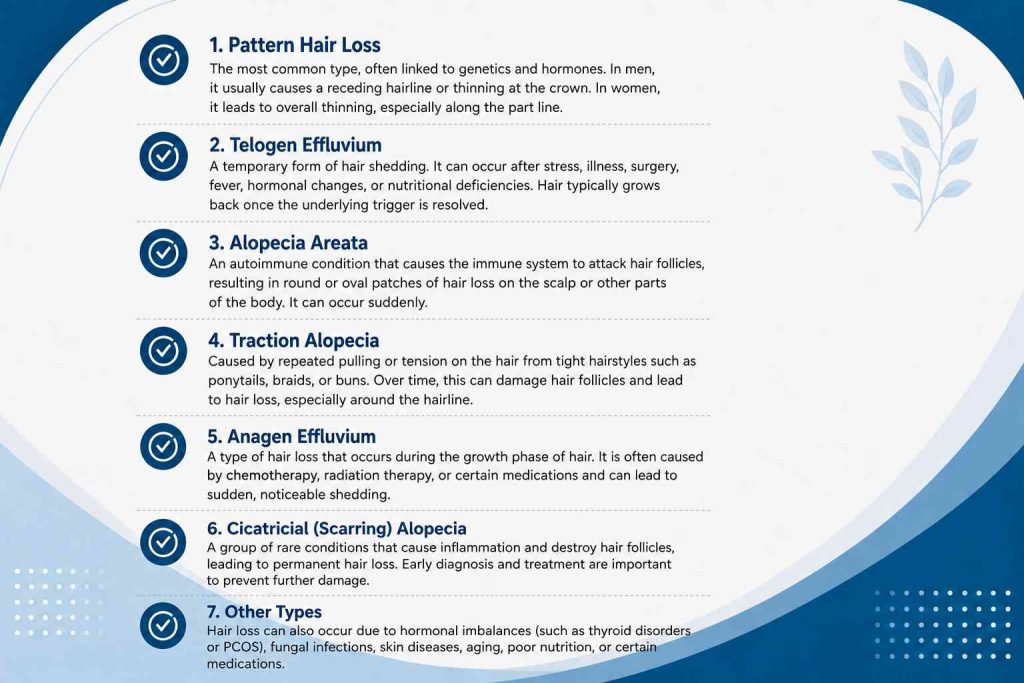
Hair loss does not look the same in everyone. Understanding the pattern can provide useful clues about the underlying condition.
Pattern Hair Loss
Pattern hair loss generally develops gradually. In men, it may begin around the temples or crown. In women, diffuse thinning or a widening central part may become more noticeable.
Telogen Effluvium
Telogen effluvium is a form of temporary increased shedding that may follow stress, illness, nutritional problems, major weight changes, or hormonal shifts.
Alopecia Areata
Alopecia areata can cause clearly defined patches of hair loss. It is associated with an immune-system response and may require specialist evaluation.
Traction-Related Hair Loss
Repeated pulling or tension from tight hairstyles may contribute to hair loss. Continuing the damaging practice can increase the risk of persistent thinning.
Scarring Hair Loss
Certain inflammatory conditions can damage hair follicles permanently. Early recognition is particularly important when scarring alopecia is suspected.
How Is Hair Loss Evaluated
A consultation usually begins with a detailed discussion about the pattern and duration of hair loss.
A healthcare professional may ask about:
- When the hair loss started
- Whether shedding is sudden or gradual
- Family history of hair loss
- Recent illnesses or infections
- Stress levels
- Dietary habits
- Weight changes
- Medications and supplements
- Hormonal symptoms
- Hair-care practices
- Scalp symptoms
The scalp and hair may then be examined to assess density, distribution, follicle appearance, and signs of inflammation or infection.
Depending on the findings, additional investigations may sometimes be recommended.
What Tests May Be Recommended
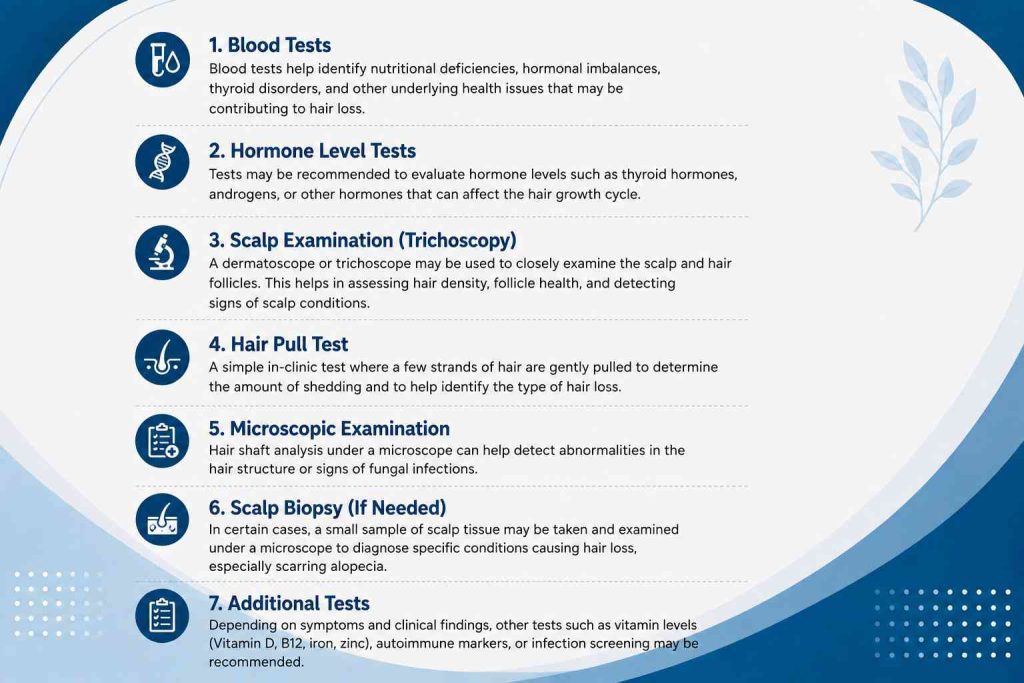
There is no single test that explains every case of hair loss. Testing should generally be based on the individual’s symptoms and clinical assessment.
Possible investigations may include blood tests for suspected nutritional deficiencies or hormonal and metabolic problems.
In selected cases, examination of the scalp and hair follicles using specialized tools can provide additional information.
Testing may help identify issues such as:
- Iron deficiency
- Thyroid abnormalities
- Vitamin deficiencies
- Hormonal problems
- Certain systemic conditions
The goal is to identify investigations that are clinically relevant rather than performing every possible test.
What Treatments Are Available for Hair Fall
Treatment depends on the cause, severity, duration, age, overall health, and pattern of hair loss. There is no single treatment that works for every person.
Medical Treatments
Depending on the diagnosis, medical treatment may include topical or oral medicines. Some medications are specifically used for certain forms of pattern hair loss, while others may be appropriate only when an underlying condition has been identified.
Medication should be used under professional guidance because treatment suitability varies between individuals.
Treatment of Nutritional Problems
If testing confirms a deficiency, correcting that deficiency may help improve hair health. Supplements should not be taken unnecessarily because excessive intake of certain nutrients can also cause health problems.
Scalp Treatment
When dandruff, inflammation, infection, or another scalp disorder contributes to hair loss, treating the scalp condition may be an important part of the overall plan.
Hair Restoration Procedures
For selected individuals with established hair loss, procedures such as hair transplantation may be considered. Suitability depends on the diagnosis, donor hair availability, pattern of hair loss, and overall scalp condition.
How Can You Choose the Right Hair Fall Doctor
Choosing a suitable healthcare professional involves more than looking for a treatment advertisement.
Relevant Experience
Look for a professional experienced in evaluating different types of hair and scalp disorders rather than focusing on only one treatment.
Proper Diagnosis
A good consultation should begin with understanding the cause of hair loss. Be cautious of approaches that immediately recommend a procedure without assessing the underlying problem.
Individualized Treatment
Hair loss varies considerably from person to person. Treatment should be based on individual findings rather than a standard package offered to everyone.
Clear Communication
The consultation should give you a reasonable understanding of the suspected cause, available options, expected timeline, and possible limitations.
Appropriate Follow-Up
Hair growth is usually a gradual process. Follow-up can help assess response to treatment and determine whether adjustments are necessary.
What Are the Benefits of Early Hair Loss Assessment
Seeking evaluation earlier can have several advantages.
Identifying the Cause
Different forms of hair loss require different approaches. A proper assessment can help distinguish genetic thinning from temporary shedding, nutritional issues, scalp disorders, and other conditions.
Preventing Further Progression
Some forms of hair loss may become more difficult to manage when treatment is delayed. Early attention may help preserve existing hair in suitable cases.
Avoiding Unnecessary Treatments
Understanding the cause can reduce the risk of spending money on treatments that may not address the actual problem.
Better Long-Term Planning
A diagnosis allows a realistic treatment strategy to be developed based on the person’s pattern and progression of hair loss.
Practical Tips for Managing Hair Fall
Professional treatment may be appropriate in some cases, but everyday hair-care habits can also support scalp and hair health.
Follow a Balanced Diet
Include adequate protein and a variety of nutrient-rich foods. Restrictive diets may increase the risk of nutritional deficiencies.
Avoid Excessive Hair Tension
Repeatedly tying hair tightly can place stress on the follicles. Choose hairstyles that minimize prolonged pulling.
Handle Wet Hair Carefully
Wet hair can be more vulnerable to breakage. Avoid aggressive brushing or combing immediately after washing.
Limit Excessive Heat
Frequent use of high-temperature styling tools can damage the hair shaft and increase breakage.
Manage Stress
Prolonged stress can influence the hair growth cycle in some people. Regular physical activity, adequate sleep, and relaxation practices can support overall well-being.
Avoid Self-Medicating
Hair supplements and medications should not automatically be considered safe or necessary. Professional advice is preferable when hair loss is persistent.
Hair Fall Treatment Requires Patience
One of the most important points to understand about hair loss treatment is that improvement may take time.
Hair follicles follow a natural growth cycle, so changes are rarely immediate. Depending on the cause and treatment, visible improvement may require several months.
Treatment outcomes can also vary. Some people may experience noticeable improvement, while others may mainly benefit from slowing further progression.
A realistic treatment plan should consider:
- The underlying cause
- Duration of hair loss
- Existing hair density
- Age and general health
- Treatment consistency
- Individual response
Regular follow-up can help determine whether the selected approach is working as expected.
Common Mistakes to Avoid
People experiencing hair loss often try multiple products or treatments at the same time. This can make it difficult to understand what is actually helping.
Common mistakes include:
- Waiting too long despite progressive thinning
- Taking supplements without confirming a deficiency
- Changing treatments too frequently
- Following unverified online remedies
- Using harsh hair products excessively
- Wearing tight hairstyles regularly
- Expecting immediate results
- Choosing treatment based only on promotional claims
A structured approach is generally more useful than trying numerous solutions without knowing the cause.
Conclusion
Hair loss can result from genetics, nutritional deficiencies, hormonal changes, stress, illness, scalp disorders, medications, or several factors occurring together. The most effective approach begins with identifying the underlying cause rather than choosing a treatment based only on visible symptoms.
If you are looking for a hair fall doctor in Pala, consider choosing a professional who provides proper evaluation, explains the possible cause clearly, and develops a treatment plan suited to your individual needs. With appropriate assessment and realistic expectations, many forms of hair loss can be managed more effectively. For additional evidence-based information on hair loss and its common causes, you can refer to the NHS guide on hair loss .