How Does Microneedling Work? 7 Powerful Skin Facts Explained
Microneedling has become a widely used cosmetic skin procedure for improving skin texture, acne scars, fine lines, enlarged pores, and other common concerns. But how does microneedling work, and why can creating tiny controlled injuries improve the appearance of the skin? For people considering microneedling in Pala, understanding the procedure, healing process, benefits, recovery, and possible side effects can help set realistic expectations.
In simple terms, microneedling uses very fine sterile needles to create microscopic channels in the skin. These controlled micro-injuries activate the skin’s natural healing response, encouraging collagen and elastin production. Over time, this remodeling process can help the skin appear smoother, firmer, and more even.
What Is Microneedling
Microneedling is a minimally invasive cosmetic procedure that uses a specialized device containing multiple fine needles. These needles repeatedly enter the skin at a carefully controlled depth.
The procedure is also known as collagen induction therapy because stimulating collagen production is one of its primary purposes.
Instead of removing a significant layer of skin, microneedling creates microscopic injuries that encourage the body to begin its natural repair process.
These microchannels are extremely small and usually begin closing soon after the procedure. However, the biological healing process they trigger continues for much longer.
Understanding this natural healing response is essential when learning how does microneedling work.
How Does Microneedling Work
So, how does microneedling work beneath the surface of the skin?
During the procedure, tiny needles penetrate the skin and create thousands of controlled micro-injuries. The body recognizes these injuries and activates its normal wound-healing response.
This process can encourage:
- Collagen production
- Elastin production
- Skin cell renewal
- Tissue remodeling
- Improved skin texture
- Greater skin firmness
- Gradual improvement in certain scars
Collagen is an important structural protein that gives the skin support and firmness. Elastin helps the skin maintain flexibility and elasticity.
As people age, natural collagen production gradually decreases. Environmental factors such as prolonged sun exposure can also contribute to changes in skin texture and firmness.
Microneedling aims to stimulate the body’s own repair mechanisms to encourage new collagen formation.
The Three Main Healing Phases
The healing response after microneedling can generally be understood in three stages.
Inflammation
Immediately after the microscopic channels are created, the body begins responding to the controlled injury. Temporary redness, warmth, sensitivity, and mild swelling can occur.
Proliferation
During this stage, cells involved in tissue repair become active. Fibroblasts play an important role because they help produce collagen and other components required for rebuilding the skin.
Remodeling
Newly formed collagen gradually reorganizes and strengthens. This process can continue for several weeks or months, which explains why the full results of microneedling are not usually immediate.
How Does Microneedling Work for Collagen Production
One of the primary reasons people undergo microneedling is its ability to stimulate the natural collagen-remodeling process.
Collagen provides structural support to the skin. As collagen production decreases with age, the skin may gradually become thinner, less firm, or more prone to visible fine lines.
Acne and other forms of skin injury can also disrupt normal collagen organization and contribute to scarring.
When microneedling creates controlled micro-injuries, the body responds as though the tissue needs repair. Fibroblasts become active during this process and can produce new collagen.
The newly produced collagen does not instantly change the skin. Instead, it gradually develops and reorganizes during the healing and remodeling phases.
This is why improvements after microneedling usually become noticeable progressively.
What Skin Concerns Can Microneedling Address
Microneedling may be considered for several cosmetic skin concerns. However, the effectiveness of treatment can vary depending on the condition, severity, treatment depth, skin characteristics, and individual healing response.
Common concerns include:
- Acne scars
- Fine lines
- Uneven skin texture
- Enlarged-looking pores
- Mild skin laxity
- Certain types of scars
- Stretch marks
- Signs of photoaging
- Rough-looking skin
Acne Scars
Microneedling is frequently used for certain types of depressed or atrophic acne scars.
These scars can develop when the skin does not produce enough collagen during the healing of acne lesions. By stimulating a new healing response, microneedling may encourage collagen remodeling within the scarred area.
Fine Lines
Fine lines can become more visible as collagen levels decrease.
By encouraging collagen formation and remodeling, microneedling may gradually soften the appearance of certain fine lines.
Enlarged-Looking Pores
Microneedling cannot literally close pores. However, improved collagen support and smoother surrounding skin may make enlarged-looking pores appear less noticeable.
Uneven Skin Texture
Skin affected by roughness or mild textural irregularities may gradually appear smoother following appropriate microneedling treatment.
How Does Microneedling Work During Treatment
Understanding how does microneedling work also involves knowing what happens during a typical treatment session.
The exact procedure may vary depending on the treatment area, skin condition, device, and selected needle depth.
Skin Assessment
Before microneedling, the skin is generally assessed to determine whether the treatment is appropriate.
Existing skin conditions, active acne, medications, previous procedures, healing history, and treatment goals may be considered.
Skin Cleansing
The treatment area is thoroughly cleaned before the procedure.
Removing makeup, oils, dirt, and other substances helps prepare the skin and supports appropriate hygiene.
Numbing the Skin
A topical numbing product may be applied before treatment, particularly when deeper microneedling is planned.
This can help minimize discomfort during the procedure.
Microneedling Procedure
The microneedling device is carefully passed over the selected treatment area.
The needles repeatedly penetrate the skin at a controlled depth, creating microscopic channels and initiating the skin’s natural healing response.
Post-Treatment Care
After treatment, appropriate soothing or hydrating products may be applied.
Instructions may also be provided regarding cleansing, moisturizing, sun protection, and skincare ingredients that should temporarily be avoided.
Types of Microneedling
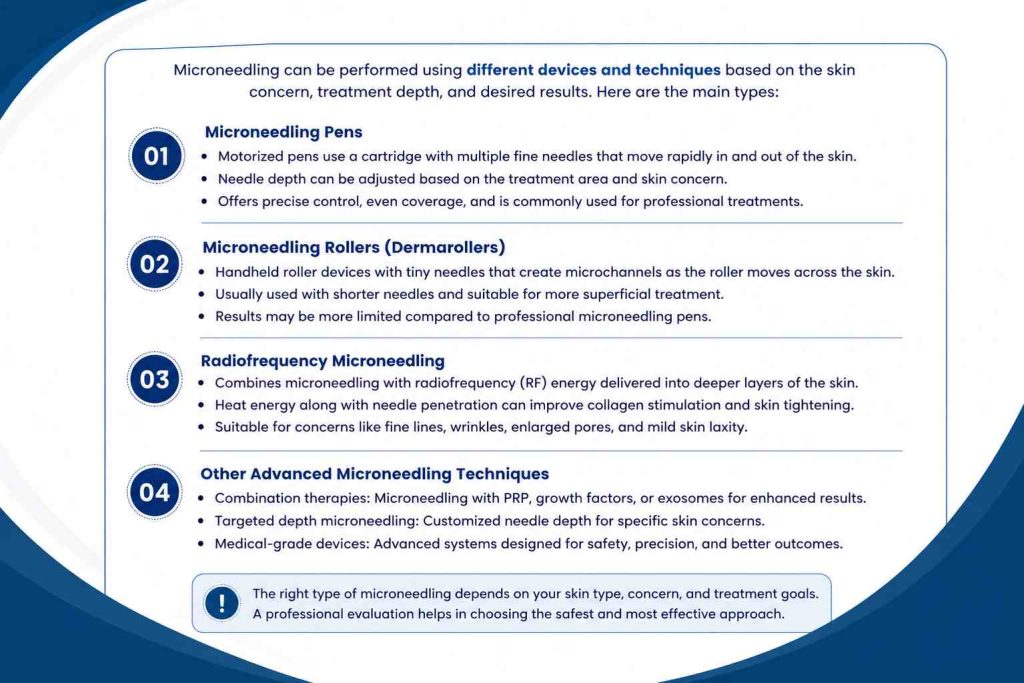
Different devices and techniques can be used to create controlled microchannels in the skin.
Microneedling Pens
Microneedling pens are motorized devices containing cartridges with multiple fine needles.
The needles move rapidly in and out of the skin. Professional devices may allow the treatment depth to be adjusted depending on the treatment area and skin concern.
Microneedling Rollers
A dermaroller is a handheld device containing a cylindrical roller covered with small needles.
When rolled over the skin, the needles create multiple tiny channels.
Radiofrequency Microneedling
Radiofrequency microneedling combines needle penetration with radiofrequency energy.
The needles enter the skin while controlled radiofrequency energy is delivered into selected tissue layers. Therefore, it differs from traditional microneedling, which relies primarily on mechanical micro-injury.
Major Benefits of Microneedling
Learning how does microneedling work makes its potential benefits easier to understand.
Encourages Collagen Production
Controlled micro-injuries activate the body’s repair response and may encourage new collagen formation.
Improves Skin Texture
As collagen remodels and the skin heals, treated areas may gradually become smoother.
Helps Improve Certain Acne Scars
Collagen remodeling can help improve the appearance of some depressed acne scars.
May Reduce Fine Lines
Improved collagen support may soften the appearance of certain fine lines and early signs of skin aging.
Minimally Invasive Procedure
Microneedling does not normally involve surgical incisions. Recovery is therefore generally shorter than with many surgical cosmetic procedures.
Can Be Used on Different Areas
Although facial microneedling is particularly common, suitable areas of the body may also be treated for concerns such as scars and stretch marks.
Gradual Results
Microneedling depends largely on natural tissue repair. Improvements therefore tend to appear progressively rather than creating an immediate dramatic transformation.
What Happens to the Skin After Microneedling
Immediately after treatment, the skin may appear red or flushed. Some people describe the appearance as being similar to mild sunburn.
Temporary effects may include:
- Redness
- Mild swelling
- Tightness
- Dryness
- Sensitivity
- Mild tenderness
- Flaking
These effects usually improve as the skin recovers, although healing time varies from person to person.
The intensity of the treatment can also influence recovery. Deeper treatments may produce more noticeable temporary redness or sensitivity than superficial procedures.
Because microneedling temporarily disrupts the skin barrier, following appropriate aftercare instructions is important.
How Long Does Microneedling Take to Work
People asking how does microneedling work often also want to know when they will notice visible results.
There is no single timeline that applies to everyone.
Some people may notice that their skin feels smoother after the initial redness and sensitivity settle. However, collagen production and remodeling occur gradually.
Visible improvements may continue developing for several weeks.
The results can depend on:
- Skin condition
- Age
- Treatment depth
- Number of sessions
- Type of concern
- Severity of scarring
- Natural healing response
- Sun exposure
- Skincare routine
- Aftercare
Because collagen remodeling takes time, the appearance of the skin immediately after treatment does not represent the final outcome.
How Many Microneedling Sessions Are Needed
The number of treatments required depends on the individual’s skin and treatment goals.
Someone seeking mild improvement in overall skin texture may require a different treatment plan from a person with established acne scars.
Multiple treatment sessions may sometimes be recommended, with appropriate intervals between sessions to allow the skin to heal.
Factors affecting the number of sessions include:
- Type of skin concern
- Severity of the condition
- Treatment depth
- Previous treatment response
- Individual healing ability
- Desired improvement
More frequent treatment does not necessarily produce better results. The skin requires sufficient time to complete the healing and remodeling process.
Microneedling Aftercare Tips
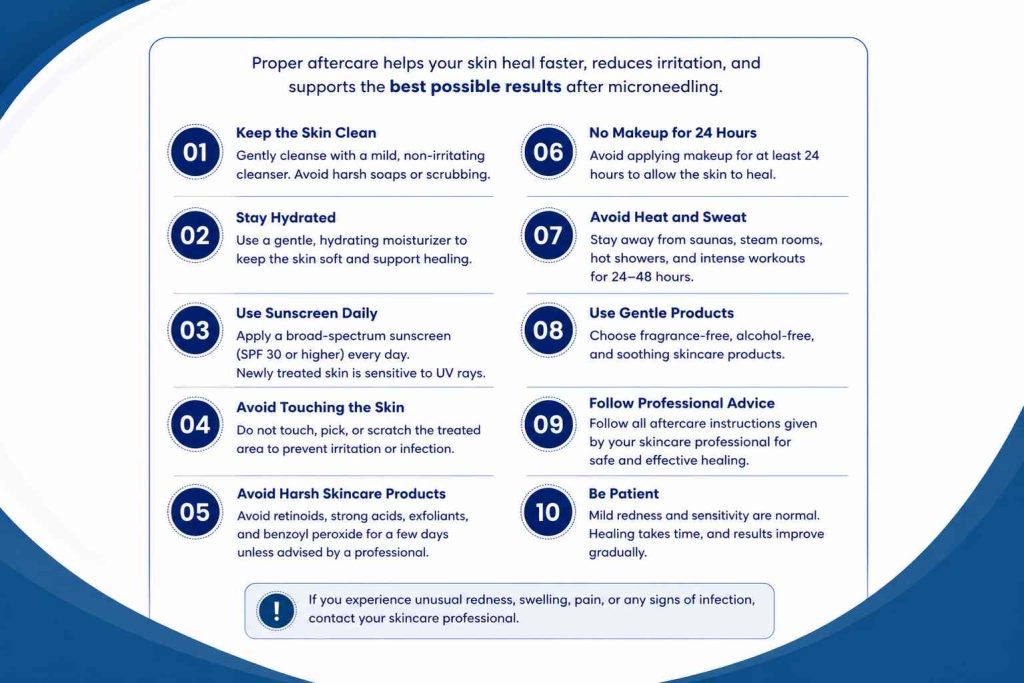
Good aftercare supports the natural healing process and may reduce unnecessary irritation.
General aftercare recommendations may include:
- Keep the treated skin clean.
- Use gentle skincare products.
- Avoid scratching or picking the skin.
- Keep the skin appropriately moisturized.
- Use suitable sun protection.
- Avoid excessive heat shortly after treatment.
- Avoid harsh exfoliating products.
- Temporarily stop irritating active ingredients when advised.
- Avoid unnecessary touching of the treated area.
- Follow the specific instructions provided after treatment.
Sun protection is particularly important because recently treated skin may be more sensitive to ultraviolet exposure.
What Should You Avoid After Microneedling
The skin barrier needs time to recover following treatment.
Depending on treatment intensity and professional instructions, you may temporarily need to avoid:
- Physical scrubs
- Chemical exfoliants
- Strong acids
- Retinoids
- Excessive sunlight
- Hot saunas
- Steam rooms
- Intense exercise immediately after treatment
- Picking or rubbing the skin
- Unsuitable cosmetic products
Using strong or irritating skincare ingredients too soon may increase redness, dryness, or sensitivity.
Products should generally be reintroduced according to the skin’s recovery and professional advice.
Is Microneedling Painful
The amount of discomfort experienced during microneedling varies.
Superficial treatment may cause only mild sensations, while deeper treatment can be more noticeable.
Common sensations include:
- Pricking
- Tingling
- Pressure
- Mild scratching
- Warmth
A topical anesthetic may be used before professional microneedling to improve comfort.
Certain areas of the face may also be more sensitive than others.
Possible Side Effects of Microneedling
Although microneedling is minimally invasive, it intentionally creates small injuries in the skin. Temporary reactions are therefore expected.
Common temporary effects include redness, mild swelling, dryness, and sensitivity.
Other possible side effects can include:
- Flaking
- Bruising
- Temporary tenderness
- Pinpoint bleeding during treatment
- Prolonged irritation
- Pigmentation changes
- Infection
- Unwanted scarring in susceptible individuals
Risks can be influenced by needle depth, treatment technique, hygiene, skin condition, aftercare, and individual healing characteristics.
Who May Not Be Suitable for Microneedling
Microneedling is not appropriate for everyone.
A professional skin assessment may be especially important for people who have:
- Active acne or inflamed lesions
- Active skin infections
- Open wounds
- Certain inflammatory skin conditions
- Significant healing difficulties
- A tendency to develop abnormal scars
- Certain medical conditions
- Medications that affect bleeding or healing
Microneedling should not simply be performed over an active skin problem without first determining whether treatment is appropriate
Professional Microneedling vs At-Home Microneedling
Professional microneedling and home-use devices should not be considered identical.
Professional treatments typically involve controlled equipment, appropriate hygiene measures, and treatment settings selected according to the person’s skin and concern.
At-home rollers generally contain shorter needles and may produce more superficial effects.
Incorrect use of a home microneedling device can increase the risk of:
- Skin irritation
- Infection
- Excessive inflammation
- Pigmentation changes
- Skin injury
Understanding how does microneedling work means recognizing that needle depth, hygiene, technique, and appropriate patient selection can all influence treatment outcomes.
Tips for Better Microneedling Results
Microneedling results depend not only on the procedure itself but also on preparation and aftercare.
Helpful practices include:
- Follow appropriate pre-treatment instructions.
- Avoid unnecessary irritation before treatment.
- Protect the skin from excessive sunlight.
- Follow the recommended treatment schedule.
- Give the skin enough time to heal between sessions.
- Use gentle skincare during recovery.
- Avoid picking peeling or dry skin.
- Maintain consistent sun protection.
- Follow professional aftercare recommendations.
- Keep expectations realistic.
Microneedling stimulates biological processes, meaning improvements are generally gradual rather than immediate.
Conclusion
So, how does microneedling work? Microneedling creates thousands of tiny, controlled channels in the skin using very fine needles. These microscopic injuries activate the body’s natural wound-healing process and can encourage the production and remodeling of collagen and elastin.
As the skin repairs itself, some people may notice gradual improvements in texture, acne scars, fine lines, firmness, and overall appearance. Results vary depending on the condition being treated, treatment depth, number of sessions, skin characteristics, and healing response.
Anyone considering microneedling in Thrissur should understand the importance of proper skin assessment, appropriate treatment technique, hygiene, realistic expectations, sun protection, and careful aftercare. According to the American Academy of Dermatology, microneedling can stimulate collagen production and may help improve concerns such as acne scars, uneven skin texture, and signs of aging.