What Is Microneedling? 10 Essential Facts for Healthier Skin
What is microneedling, and why has it become such a widely discussed skin rejuvenation procedure? Microneedling is a minimally invasive cosmetic treatment that uses very fine, sterile needles to create controlled micro-injuries in the skin. These tiny punctures stimulate the skin’s natural repair response and encourage the production of collagen and elastin. For people exploring professional skin rejuvenation options in Pala, understanding what is microneedling, how it works, and what results may be possible can help them make informed decisions about their skin care.
Microneedling is commonly considered for concerns such as acne scars, uneven skin texture, enlarged pores, fine lines, wrinkles, and certain types of pigmentation. Because the treatment works by supporting the skin’s own renewal mechanisms, improvements usually develop gradually rather than immediately.
This guide explains the microneedling procedure, its benefits, common uses, treatment process, recovery, possible side effects, and important aftercare tips.
What Is Microneedling
Microneedling, sometimes called collagen induction therapy, is a cosmetic procedure in which a specialized device containing multiple tiny needles is moved across targeted areas of the skin.
The needles penetrate the skin at carefully controlled depths. These microscopic channels trigger a natural healing response without intentionally causing significant damage to the surrounding tissue.
During this healing process, the skin may increase its production of important structural proteins, particularly:
- Collagen
- Elastin
- Other components involved in skin repair
Collagen provides strength and structure to the skin, while elastin contributes to flexibility and resilience. Their gradual remodeling can help improve the appearance and texture of treated skin.
Understanding what is microneedling is important because it differs from treatments that primarily remove or exfoliate the skin’s surface. Its main purpose is to stimulate controlled skin renewal from within.
How Does Microneedling Work
The principle behind microneedling is controlled wound healing.
When tiny needles enter the skin, the body recognizes the microscopic punctures as injuries and activates its repair processes. These punctures are extremely small, but they can be sufficient to initiate a healing response.
The Skin’s Healing Response
The process generally involves several stages.
Initial response: The skin reacts to the microscopic punctures and begins the repair process.
Tissue formation: Fibroblasts and other cells involved in healing become active. New collagen and other structural components may begin developing.
Remodeling: Over the following weeks and months, collagen fibers continue to reorganize and mature.
This gradual remodeling explains why microneedling results often continue developing after the visible redness from the procedure has disappeared.
What Is Microneedling Used For
Another important part of understanding what is microneedling is knowing the skin concerns for which it may be considered.
Microneedling can be used for several cosmetic concerns, including:
Acne Scars
Microneedling is commonly used for certain types of atrophic acne scars, which appear as depressions or indentations in the skin.
By encouraging collagen remodeling, the procedure may gradually soften the appearance of some acne scars.
However, different scar types respond differently. Deep or complex scars may require additional or alternative treatment approaches.
Fine Lines and Wrinkles
As skin ages, collagen production naturally decreases. This can contribute to fine lines, wrinkles, and changes in firmness.
Collagen induction therapy may help improve the overall appearance of fine lines by stimulating structural remodeling.
Enlarged Pores
Microneedling may help improve overall skin texture, which can make enlarged pores appear less noticeable in some individuals.
Uneven Skin Texture
Roughness, minor irregularities, and uneven texture may improve gradually as the skin undergoes renewal.
Stretch Marks
Microneedling may also be considered for certain stretch marks. Results can vary depending on their age, depth, location, and individual skin characteristics.
Certain Pigmentation Concerns
Some pigmentation concerns may be treated using carefully selected microneedling protocols. However, pigmentation requires appropriate assessment because irritation can sometimes worsen discoloration, particularly in susceptible skin types.
What Are the Benefits of Microneedling
The potential benefits of microneedling depend on the individual’s skin condition, treatment depth, number of sessions, and healing response.
Supports Natural Collagen Production
One of the primary microneedling benefits is collagen stimulation. Instead of simply changing the surface appearance of the skin, the procedure encourages the body’s natural repair mechanisms.
Improves Skin Texture
Microneedling may gradually make skin appear smoother and more even.
Reduces the Appearance of Certain Scars
Collagen remodeling may help soften the appearance of some depressed acne scars and other suitable scars.
Minimally Invasive
Compared with more invasive cosmetic procedures, microneedling generally involves relatively small controlled injuries to the skin.
Customizable Treatment
Needle depth and treatment intensity can be adjusted depending on the area being treated and the specific skin concern.
Gradual, Natural-Looking Improvement
Changes usually develop progressively as collagen remodeling occurs. This can produce subtle and natural-looking skin improvements rather than an abrupt transformation.
Types of Microneedling
Different approaches may be used depending on the treatment goals.
Traditional Microneedling
Standard microneedling uses a mechanical device with multiple sterile needles to create controlled microchannels in the skin.
It may be used for concerns involving texture, fine lines, pores, and acne scars.
Automated Microneedling
Modern pen-shaped devices allow practitioners to control needle depth and movement more precisely. Different depths can be selected for different areas of the face or body.
Radiofrequency Microneedling
Radiofrequency microneedling combines needles with controlled radiofrequency energy delivered into specific layers of the skin.
Although it shares the microneedling concept, it is a distinct procedure because it adds thermal energy to the treatment.
The appropriate technique depends on the skin concern, treatment objectives, skin type, and professional assessment.
What Happens During a Microneedling Procedure
Knowing what happens during treatment can make the answer to what is microneedling easier to understand.
Skin Assessment
Before treatment, the skin is usually assessed to identify the primary concern and determine whether microneedling is appropriate.
Factors that may be considered include:
- Skin type
- Acne activity
- Scar characteristics
- History of abnormal scarring
- Pigmentation tendency
- Current skin infections
- Medications
- Previous cosmetic procedures
Skin Cleansing
The treatment area is thoroughly cleaned to reduce contamination and prepare the skin.
Numbing
A topical numbing cream may be applied before deeper microneedling procedures to improve comfort.
Microneedling Treatment
The device is passed systematically over the treatment area. The needles create numerous microscopic channels at a selected depth.
Some people describe the sensation as mild scratching, vibration, or pressure.
Post-Treatment Care
After treatment, soothing or protective products may be applied depending on the procedure and individual skin requirements.
What Does Skin Look Like After Microneedling
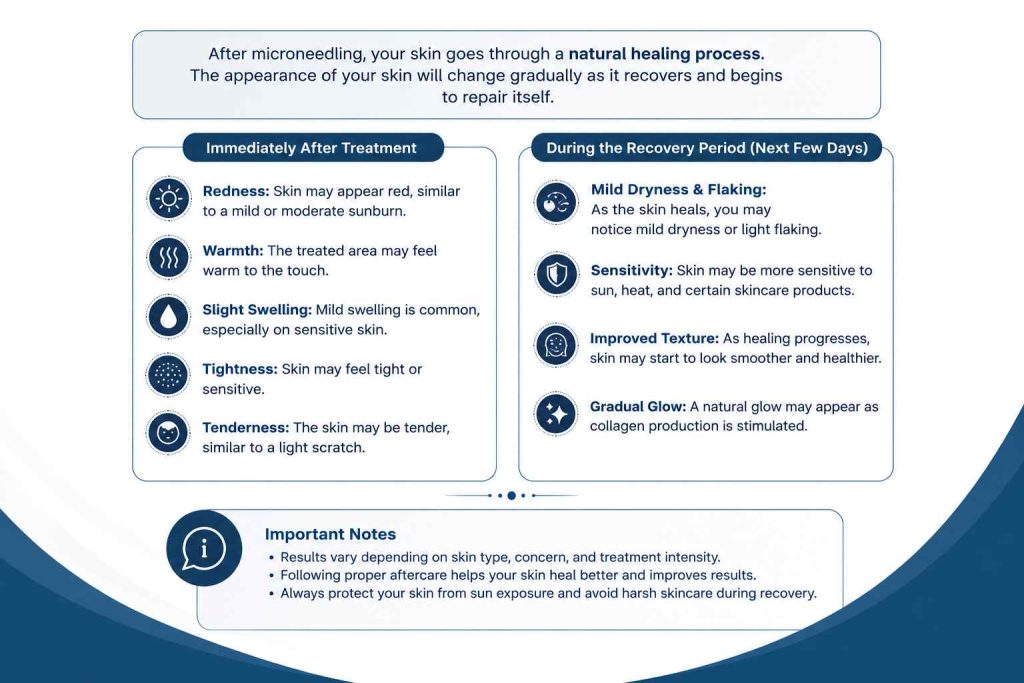
Temporary redness is one of the most common effects following treatment.
Immediately after microneedling, the skin may appear similar to a mild or moderate sunburn.
Possible short-term effects include:
- Redness
- Mild swelling
- Warmth
- Tightness
- Tenderness
- Mild dryness
- Temporary flaking
These effects generally decrease as the skin recovers. The duration varies according to treatment intensity and individual sensitivity.
Aggressive exfoliation and irritating skin care products are generally avoided during the early recovery period.
Microneedling Aftercare Tips
Proper aftercare is an important part of the treatment process because the skin barrier may temporarily be more sensitive.
Keep the Skin Clean
Use gentle cleansing methods and avoid aggressively rubbing or scrubbing the treated area.
Avoid Harsh Active Ingredients
Strong acids, retinoids, abrasive scrubs, and other potentially irritating products may need to be temporarily discontinued according to professional instructions.
Protect the Skin From Sun Exposure
Sun protection is particularly important after microneedling because recently treated skin can be more sensitive.
Broad-spectrum sunscreen, protective clothing, and avoiding excessive direct sunlight can help protect recovering skin.
Avoid Picking or Scratching
If mild dryness or flaking occurs, allow the skin to recover naturally. Picking can increase irritation and potentially affect healing.
Follow Professional Instructions
Aftercare recommendations can vary depending on treatment depth and the products used during the procedure. Individual instructions should therefore be followed carefully.
How Many Microneedling Sessions Are Needed
There is no universal number of microneedling sessions suitable for everyone.
Some people undergo a single treatment for general skin rejuvenation, while concerns such as acne scars or significant texture irregularities may require a planned series of treatments.
The number of sessions can depend on:
- Severity of the concern
- Type of scar
- Treatment depth
- Age and skin condition
- Individual healing response
- Desired outcome
Sessions are generally spaced apart to allow sufficient time for the skin to heal and collagen remodeling to occur.
More frequent treatment is not necessarily better. Adequate recovery time is important.
When Can Microneedling Results Be Seen
Microneedling does not normally produce its full effect immediately.
Some people notice that their skin appears smoother or fresher after the initial redness settles. However, collagen remodeling occurs gradually.
Changes may continue developing over several weeks or months.
Potential improvements can include:
- Smoother skin texture
- Reduced appearance of certain acne scars
- Softer fine lines
- More even-looking skin
- Improved overall skin quality
Results differ considerably between individuals, and no cosmetic procedure can guarantee a particular outcome.
Possible Side Effects and Risks
Microneedling is minimally invasive, but it is still a procedure that deliberately penetrates the skin. Therefore, side effects and complications are possible.
Common temporary reactions may include redness, swelling, tenderness, dryness, and minor irritation.
Less common complications may include:
- Infection
- Persistent irritation
- Changes in pigmentation
- Prolonged redness
- Allergic or irritant reactions to products
- Scarring in susceptible individuals
Sterile technique and appropriate professional assessment are particularly important for reducing avoidable risks.
Who May Consider Microneedling
Microneedling may be considered by adults who want to improve certain cosmetic skin concerns without undergoing more invasive procedures.
Potential candidates may include people concerned about:
- Atrophic acne scars
- Fine lines
- Uneven skin texture
- Enlarged-looking pores
- Certain stretch marks
- Mild age-related skin changes
However, suitability cannot be determined solely by the appearance of a skin concern.
When Should Microneedling Be Avoided
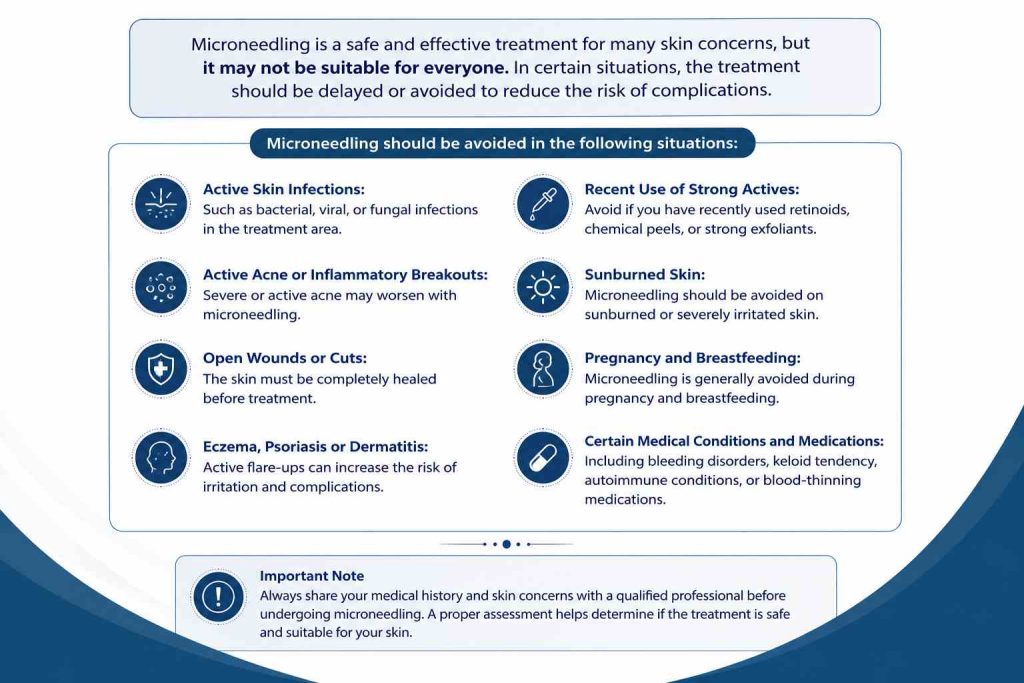
Microneedling is not appropriate for every person or every skin condition.
Treatment may need to be avoided or postponed when there is:
- Active skin infection
- Active inflammatory acne in the treatment area
- Open wounds
- Significant skin irritation
- Certain inflammatory skin conditions
- A tendency toward abnormal or keloid scarring
- Poor wound healing
- Certain medications or medical circumstances affecting healing
A qualified healthcare or skin professional should assess individual suitability before treatment.
Professional Microneedling vs Home Microneedling
Professional microneedling and home-use needling devices should not be considered equivalent.
Professional procedures can use controlled needle depths, sterile or single-use components, and protocols selected for specific skin concerns.
At-home devices may have shorter needles, but improper cleaning, excessive pressure, repeated passes, or incorrect technique can increase the possibility of:
- Skin irritation
- Infection
- Pigmentation changes
- Barrier damage
- Unwanted inflammation
Attempting deeper microneedling without appropriate training can significantly increase risk.
Microneedling for Acne Scars
Acne scarring is one of the most common reasons people research what is microneedling.
When acne inflammation damages collagen in the skin, depressed scars can develop. Microneedling creates controlled micro-injuries around these areas and encourages collagen remodeling.
Over multiple treatment cycles, some scars may become shallower and blend more evenly with surrounding skin.
However, acne scars vary significantly.
Ice-pick scars, rolling scars, boxcar scars, raised scars, and pigmentation left after acne may require different approaches. Therefore, identifying the scar type is important before selecting treatment.
Microneedling for Skin Rejuvenation
Microneedling is also widely used for general skin rejuvenation.
Collagen and elastin naturally change with age. Environmental factors, particularly ultraviolet exposure, can further contribute to changes in texture, pigmentation, and elasticity.
By encouraging controlled repair, microneedling may help improve the appearance of:
- Early fine lines
- Mild textural irregularities
- Dull-looking skin
- Uneven skin surface
- Early signs of photoaging
The goal is generally gradual improvement in skin quality rather than dramatically changing facial features.
How to Prepare for Microneedling
Preparation can influence comfort, safety, and recovery.
Before treatment, individuals should provide accurate information about medications, previous cosmetic procedures, allergies, skin conditions, and any history of unusual scarring.
Depending on professional advice, certain irritating skin products may need to be stopped temporarily.
It is also useful to avoid unnecessary irritation or excessive sun exposure before treatment.
Most importantly, microneedling should not be performed over skin that is actively infected, significantly inflamed, or damaged.
Microneedling and Collagen Production
The relationship between microneedling and collagen is central to understanding how the treatment works.
Collagen forms part of the structural framework of healthy skin. With age and environmental exposure, collagen quality and quantity can change.
Controlled micro-injuries created during microneedling activate biological processes involved in tissue repair. New collagen is formed and subsequently remodeled.
Because this process takes time, expecting immediate final results can lead to unrealistic expectations.
The gradual nature of collagen formation is also why treatment plans are usually evaluated over weeks or months rather than days.
Tips for Getting the Most From Microneedling
Several practical considerations can help support a safer treatment experience.
- Have the skin concern properly assessed before treatment.
- Discuss realistic expectations.
- Follow pre-treatment instructions carefully.
- Avoid microneedling over active infections or wounds.
- Follow recommended aftercare.
- Use appropriate sun protection.
- Avoid picking or aggressively exfoliating recovering skin.
- Allow sufficient time between sessions.
- Do not assume deeper needling automatically provides better results.
- Seek professional advice if unusual or persistent reactions develop.
Consistency with aftercare can be just as important as the procedure itself.
Conclusion
So, what is microneedling? It is a minimally invasive collagen induction procedure that uses controlled microscopic punctures to stimulate the skin’s natural healing and remodeling processes. It may help improve certain acne scars, fine lines, enlarged-looking pores, uneven texture, and other suitable cosmetic concerns.
Results depend on the skin condition, treatment technique, number of sessions, and individual healing response. Appropriate assessment, sterile technique, realistic expectations, and careful aftercare are essential. Anyone considering microneedling in Pala should seek an individualized skin assessment to determine whether the procedure is suitable for their particular concerns and goals. According to the American Academy of Dermatology (AAD), microneedling can stimulate collagen production and may help improve the appearance of acne scars, fine lines, wrinkles, and uneven skin texture.