7 Effective Hair Fall Treatment in Pala: Hair Growth Guide
Hair fall is a common concern that can affect people of different ages and lifestyles. Losing some hair every day is normal, but excessive shedding, visible thinning, widening of the hair part, or bald patches may indicate an underlying problem. Choosing the right hair fall treatment in Pala starts with understanding why the hair is falling and whether the problem is temporary or progressive.
Hair growth depends on several factors, including genetics, hormones, nutrition, stress, medications, scalp health, and overall health. Because the cause can differ from one person to another, a treatment that works for one individual may not be suitable for someone else.
A proper evaluation can help identify the pattern and possible cause of hair loss. Based on the findings, a healthcare professional may recommend lifestyle changes, topical treatments, oral medicines, procedures, or a combination of approaches.
What Is Hair Fall
Hair fall refers to excessive shedding of hair from the scalp. It can occur as temporary shedding or as a progressive form of hair loss that gradually reduces hair density.
Normally, individual hairs move through different stages of growth. The growth phase is followed by a resting phase and eventually shedding. When more hairs than usual enter the shedding phase or when new hair growth becomes weaker, noticeable thinning may develop.
Common signs include:
- Increased hair on pillows, clothing, or bathroom floors
- Hair coming out in large amounts while washing or combing
- A widening central hair part
- Reduced hair density around the crown
- Receding hairline
- Visible scalp
- Small or large bald patches
- Gradual thinning of individual hair strands
Understanding these changes is important when considering hair fall treatment in Pala because early assessment may help identify treatable causes.
Common Causes of Hair Fall
Hair loss can develop because of one or several contributing factors. Identifying the cause is one of the most important parts of treatment.
Genetic Hair Loss
Androgenetic alopecia is one of the most common causes of progressive hair thinning in both men and women. It is influenced by genetics and sensitivity to certain hormones.
Men may notice a receding hairline or thinning around the crown, while women may experience gradual thinning across the top of the scalp.
Stress and Lifestyle Factors
Significant physical or emotional stress can temporarily disrupt the normal hair growth cycle. Poor sleep, rapid weight loss, restrictive diets, and major life changes may also contribute to increased shedding.
Nutritional Deficiencies
Insufficient levels of nutrients such as iron, protein, vitamin D, zinc, or other essential nutrients may affect healthy hair growth. Nutritional problems should be confirmed through appropriate assessment rather than assuming that supplements are always necessary.
Hormonal Changes
Hormonal fluctuations associated with conditions affecting the thyroid, reproductive hormones, or other endocrine functions can contribute to hair thinning.
Scalp Conditions
Dandruff, inflammation, fungal infections, psoriasis, and other scalp disorders can affect the scalp environment and sometimes contribute to increased shedding or breakage.
Medications and Medical Conditions
Some medicines and systemic illnesses may cause temporary or persistent hair loss. If hair loss begins after starting a medication or following an illness, professional evaluation can help determine whether there is a connection.
Types of Hair Loss
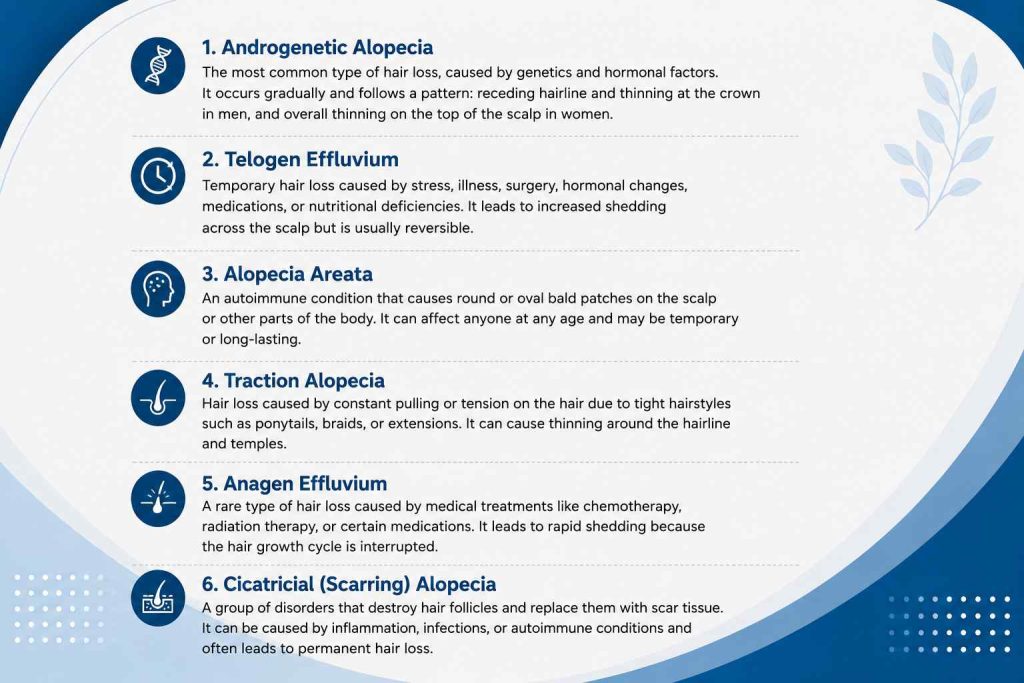
Different types of hair loss require different approaches. Understanding the pattern can help guide the assessment.
Androgenetic Alopecia
This type develops gradually and commonly follows recognizable patterns. Hair follicles may become progressively smaller, producing finer and shorter hairs.
Telogen Effluvium
Telogen effluvium often presents as increased shedding rather than distinct bald patches. It may occur after illness, major stress, surgery, significant weight loss, or nutritional problems.
Alopecia Areata
Alopecia areata can cause smooth, round or oval patches of hair loss. It is associated with an autoimmune process and may require specialist assessment.
Traction Alopecia
Repeated pulling or tension from tight hairstyles can damage hair follicles. Continued traction may result in persistent hair loss.
Hair Shaft Breakage
Not all visible hair loss comes from the root. Excessive heat styling, chemical treatments, rough handling, and certain hair-care practices can cause strands to break.
Symptoms That May Need Attention
Some hair shedding is expected, but certain changes deserve professional evaluation.
Look for:
- Sudden or rapidly increasing hair loss
- Hair loss occurring in patches
- Significant thinning over a short period
- Persistent scalp itching or burning
- Redness, scaling, or inflammation
- Pain or tenderness of the scalp
- Receding hairline
- Progressive crown thinning
- Hair loss accompanied by other unexplained symptoms
Early evaluation can be particularly useful when hair loss is progressing quickly. It allows the underlying cause to be considered before choosing a treatment.
How Hair Fall Is Diagnosed
A suitable hair fall treatment in Pala should ideally begin with an assessment rather than a one-size-fits-all approach.
During an evaluation, the healthcare professional may ask about:
- When the hair loss started
- Whether it developed suddenly or gradually
- Family history of hair loss
- Recent illness or surgery
- Stress levels and sleep
- Dietary changes
- Weight changes
- Medications and supplements
- Menstrual or hormonal changes when relevant
- Hair-styling practices
- Scalp symptoms
The scalp and hair may also be examined to determine the pattern and severity of hair loss.
Tests That May Be Recommended
Testing depends on the person’s history and clinical findings. In selected cases, blood tests may be considered to check for nutritional deficiencies, thyroid abnormalities, hormonal concerns, or other possible contributors.
A scalp examination or dermoscopy can provide additional information about the follicles and hair shafts.
Hair Fall Treatment Options
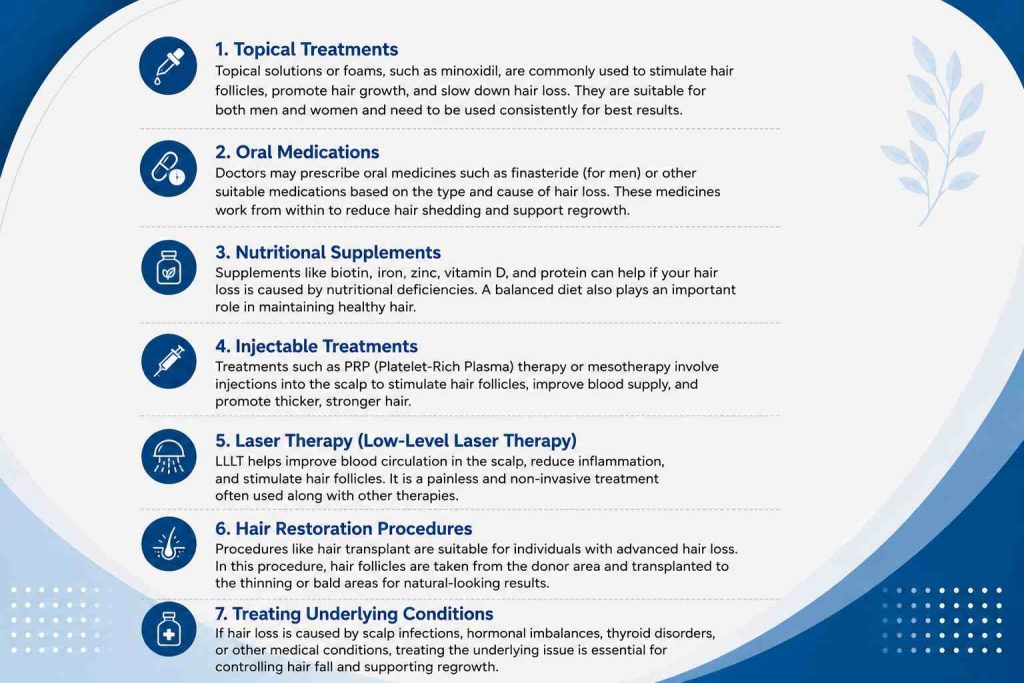
The most appropriate hair fall treatment in Pala depends on the underlying cause, severity, age, overall health, and treatment goals.
Topical Treatments
Topical medications may be recommended for certain types of hair loss. These treatments are applied directly to the scalp and may help support hair growth or reduce progression in appropriate patients.
Consistency is important, and results generally take time. Treatment should be used according to professional advice.
Oral Medicines
Certain oral medications may be considered for specific forms of hair loss. Their suitability depends on individual health factors, possible side effects, interactions, and whether the person is an appropriate candidate.
They should not be started without professional guidance.
Treatment for Nutritional Problems
When nutritional deficiency contributes to hair loss, correcting the underlying deficiency may support recovery.
Instead of taking multiple supplements without assessment, it is generally better to identify whether a deficiency is actually present and address it appropriately.
Treatment of Scalp Conditions
If dandruff, inflammation, infection, or another scalp disorder contributes to hair shedding, treating the scalp condition may be an important part of the overall plan.
Hair Restoration Procedures
For selected patients with established hair thinning or permanent follicular loss, hair restoration procedures may be discussed. Hair transplantation is one option in suitable candidates.
The decision depends on factors such as the pattern of hair loss, donor hair availability, follicle health, age, and long-term expectations.
Benefits of Appropriate Hair Fall Treatment
A properly selected treatment plan can provide several potential benefits.
Helps Address the Underlying Cause
Rather than simply treating visible thinning, a professional assessment attempts to identify what is contributing to the problem.
May Reduce Excessive Shedding
When the underlying trigger can be identified and managed, excessive shedding may gradually decrease.
Supports Hair Density
Some treatments can help maintain or improve hair density when follicles remain capable of producing hair.
Helps Protect Existing Hair
For progressive hair loss, timely treatment may help preserve existing follicles and slow further thinning.
Improves Confidence
Visible hair thinning can affect confidence and social comfort. Managing the condition can help people feel more comfortable with their appearance.
How Long Does Hair Fall Treatment Take
Hair growth is naturally slow, so treatment should not be judged after only a few days or weeks.
The time required depends on:
- Cause of hair loss
- Severity and duration
- Treatment method
- Individual response
- Consistency with treatment
- Presence of ongoing triggers
Some people may notice reduced shedding before they see visible improvement in density. New hair growth may take several months because follicles follow a biological growth cycle.
Regular follow-up can help determine whether a treatment is working and whether adjustments are necessary.
Practical Tips to Support Healthy Hair
Treatment works best when combined with sensible hair-care habits.
Maintain a Balanced Diet
Include adequate protein, vegetables, fruits, whole grains, and other nutrient-rich foods. Avoid extreme dieting or prolonged restrictive eating patterns.
Handle Hair Gently
Avoid aggressive brushing, excessive pulling, and hairstyles that place repeated tension on the roots.
Limit Excessive Heat
Frequent use of high-temperature styling tools can damage the hair shaft and increase breakage.
Avoid Unnecessary Chemical Treatments
Repeated bleaching, straightening, or harsh chemical treatments may weaken the hair.
Manage Stress
Regular physical activity, adequate sleep, relaxation techniques, and healthy routines may help support overall wellbeing.
Keep the Scalp Clean
Regular scalp hygiene can help manage oil, buildup, and common scalp concerns. The appropriate washing frequency depends on scalp type and individual needs.
When Should You Seek Hair Fall Treatment
It is reasonable to consider professional assessment when hair loss becomes persistent, noticeable, or progressively worse.
You should particularly consider an evaluation if:
- Hair shedding continues for several months
- The scalp becomes increasingly visible
- A bald patch appears suddenly
- The hairline changes noticeably
- There is significant scalp irritation
- Hair loss follows an illness or major health event
- Hair loss occurs together with other symptoms
- Home remedies have not improved the problem
Seeking help early may be beneficial because some causes of hair loss are easier to manage before significant follicular damage occurs.
What Makes a Hair Fall Treatment Plan Effective
An effective hair fall treatment in Pala should be individualized rather than based solely on advertisements or popular home remedies.
A structured approach may include:
- Identifying the pattern of hair loss
- Reviewing possible triggers
- Examining the scalp and hair
- Ordering tests when clinically appropriate
- Selecting a suitable treatment
- Following the treatment consistently
- Monitoring progress
- Adjusting the plan when required
This approach helps ensure that treatment is directed toward the actual cause rather than simply addressing the visible symptom.
Hair Fall Treatment for Men and Women
Hair loss can affect men and women differently.
Men commonly experience receding hairlines and crown thinning associated with androgenetic alopecia. Women may experience diffuse thinning, particularly across the central scalp, although several other causes are possible.
Women may also experience hair shedding following pregnancy or during certain hormonal changes. Men can also experience hair loss related to medical conditions, medications, nutritional factors, and scalp problems.
Because the pattern and causes can differ, treatment should be based on an individual’s clinical situation rather than gender alone.
Common Mistakes to Avoid
Many people try several products at once when they notice increased hair shedding. This can make it difficult to understand what is helping and what may be irritating the scalp.
Avoid:
- Starting prescription medicines without guidance
- Taking high-dose supplements without identifying a deficiency
- Relying only on oils for significant hair loss
- Ignoring sudden bald patches
- Using excessive heat on damaged hair
- Wearing consistently tight hairstyles
- Expecting immediate results
- Changing treatments too frequently
A consistent, evidence-based approach is generally more useful than trying multiple remedies simultaneously.
Conclusion
Hair fall can result from genetics, hormonal changes, nutritional issues, stress, scalp conditions, medications, medical problems, or damaging hair-care practices. Because the causes are diverse, selecting an appropriate hair fall treatment in Pala requires understanding the individual pattern and possible triggers.
Effective management may include topical or oral medicines, correction of nutritional deficiencies, treatment of scalp conditions, lifestyle adjustments, or hair restoration procedures for suitable candidates. Results usually take time, making consistency and realistic expectations important.
If hair shedding is persistent or progressively increasing, professional evaluation can help determine the cause and guide an appropriate treatment plan. With timely assessment, suitable treatment, and healthy hair-care habits, many people can improve scalp health, manage excessive shedding, and protect existing hair. For individuals seeking hair fall treatment in Pala, a personalized approach is the most appropriate starting point. You can learn more about common causes, diagnosis, and treatment approaches for hair loss from the American Academy of Dermatology Association, a trusted dermatology resource.