Causes of Hair Loss in Women: 10 Common Reasons
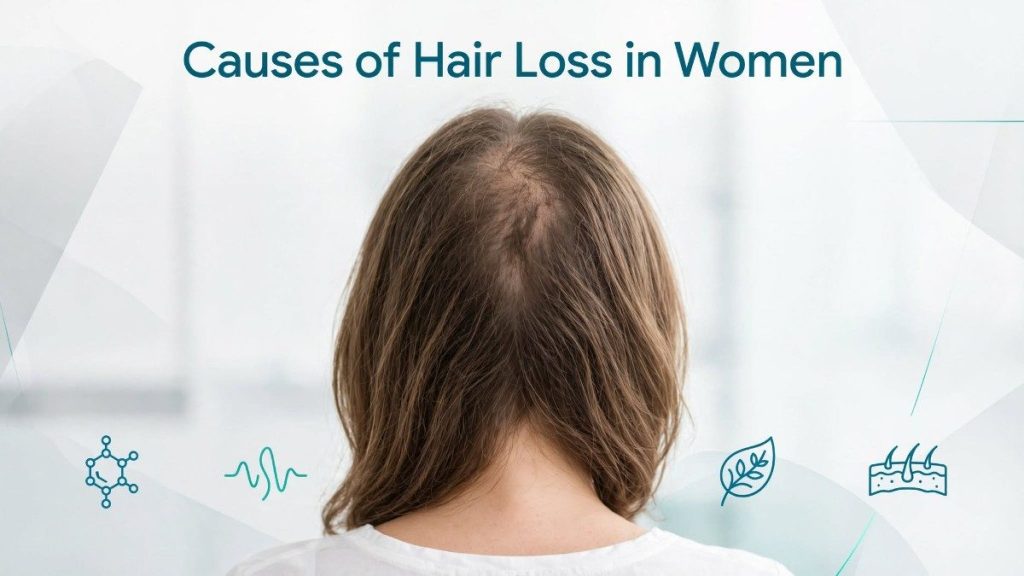
Causes of Hair Loss in Women may include hormonal changes, stress, nutritional problems, hereditary factors, scalp conditions, certain medicines, or health conditions. Hair shedding can also occur temporarily after an illness or major physical change. Hair loss in women can happen for many different reasons.
Losing some hair each day is normal because hair naturally moves through different growth and shedding phases. The concern arises when shedding becomes noticeably heavier, the hair becomes thinner, the parting starts to widen, or the scalp becomes more visible. Understanding the reason behind hair loss is important because different causes require different approaches. Looking at the pattern, timing, scalp condition, health history, and other symptoms can help identify what may be contributing to the problem.
What Are the Most Common Causes of Hair Loss in Women?
The most common causes include hormonal changes, hereditary hair loss, stress, nutritional deficiencies, certain medical conditions, scalp disorders, medications, and physical changes such as rapid weight loss.
Hair loss may have one clear cause or several contributing factors at the same time. This is why simply treating the visible thinning may not address the reason the shedding started.
Common causes include:
- Hormonal changes
- Hereditary hair loss
- Physical or emotional stress
- Nutritional deficiencies
- Thyroid and other medical conditions
- Pregnancy and the postpartum period
- Scalp infections or inflammatory conditions
- Certain medicines
- Significant weight loss
- Hair practices that place repeated stress on the hair
The pattern and duration of hair loss can provide useful clues about the underlying cause.
Can Hormonal Changes Cause Hair Loss in Women?
Yes, hormonal changes can contribute to hair shedding and thinning. Changes in hormone levels can affect the normal hair growth cycle, making some women notice increased shedding or reduced hair density.
Hormonal changes may occur during pregnancy, after childbirth, around menopause, or with certain hormonal conditions. Some women may also notice changes associated with conditions such as polycystic ovary syndrome (PCOS).
The pattern of hair loss can differ depending on the hormonal factor involved. Some women experience overall shedding, while others notice gradual thinning around the crown or widening of the central hair part.
Hormonal hair loss should be considered alongside other symptoms and personal health history rather than assumed from hair thinning alone.
Can Stress Cause Hair Loss in Women?
Stress can contribute to increased hair shedding. Significant physical or emotional stress may affect the hair growth cycle and cause more hairs to enter the shedding phase.
This type of shedding may not appear immediately after the stressful event. A noticeable increase in hair fall can occur later because of the time involved in the hair growth cycle.
Stress-related shedding may occur after:
- Major emotional stress
- A serious illness
- Surgery
- High fever
- Significant changes in weight
- Major physical strain
When the underlying trigger is addressed, the hair cycle may gradually return toward its usual pattern. However, continued or severe shedding should not automatically be attributed to stress because other causes can occur at the same time.
Can Poor Nutrition Lead to Hair Loss?
Yes. Inadequate nutrition can affect normal hair growth. The body needs sufficient nutrients to support healthy hair production, and significant nutritional deficiencies may contribute to shedding or thinning.
Low levels of nutrients such as iron and certain vitamins or minerals can be associated with hair loss in some people. However, taking supplements without knowing whether a deficiency exists is not always appropriate.
Nutritional factors may be particularly relevant when hair loss occurs alongside:
- Restrictive dieting
- Rapid weight loss
- Poor appetite
- Changes in eating patterns
- Other signs of nutritional deficiency
A proper assessment can help determine whether nutrition is actually contributing to the hair problem.
Does Hereditary Hair Loss Affect Women?
Yes. Hereditary hair loss can affect women and may gradually become more noticeable over time. It is sometimes called female pattern hair loss.
Women with this type of hair loss commonly notice reduced density around the top of the scalp or a widening central hair part. Unlike some forms of sudden shedding, hereditary thinning can develop gradually.
Family history can provide an important clue, but a woman can experience hereditary hair loss even when the pattern is not obvious in her family.
Early assessment can help distinguish hereditary thinning from temporary shedding or other causes of hair loss.
Can Pregnancy and Childbirth Cause Hair Shedding?
Yes. Pregnancy and the period after childbirth can be associated with changes in hair shedding.
During pregnancy, hormonal changes can alter the normal hair cycle. After delivery, hormonal levels change again, and some women experience increased shedding.
Postpartum shedding can be noticeable several months after childbirth. It may feel sudden because a larger amount of hair can be lost during washing, brushing, or styling.
This does not necessarily mean permanent hair loss. However, persistent thinning or other symptoms should be assessed rather than assuming that all postpartum hair loss is temporary.
Can Thyroid Problems Cause Hair Loss in Women?
Thyroid disorders can be associated with changes in hair growth and shedding. Both an underactive thyroid and an overactive thyroid may affect the hair cycle.
Hair changes may occur along with other symptoms related to thyroid function. Depending on the individual situation, these may include changes in weight, energy levels, temperature sensitivity, menstrual changes, or changes in skin condition.
Hair loss alone cannot confirm a thyroid problem. When other symptoms are present, a medical evaluation may help determine whether thyroid function is contributing to the hair changes.
Can Scalp Problems Cause Hair Loss?
Yes. Conditions affecting the scalp can sometimes contribute to hair shedding or hair loss.
Inflammation, infections, and other scalp disorders may affect the normal environment needed for healthy hair growth. Some scalp conditions can also cause itching, scaling, redness, soreness, or other noticeable changes.
Hair loss accompanied by scalp symptoms deserves attention because treating the scalp condition may be an important part of managing the hair problem.
It is better to identify the specific scalp condition rather than assuming that all scalp-related hair loss has the same cause.
Can Medicines Cause Hair Loss in Women?
Certain medicines can affect the hair growth cycle and may cause increased shedding or thinning in some people.
The relationship between a medicine and hair loss can depend on the medication, dosage, duration of use, and individual response. Hair loss may also result from the health condition for which the medicine was prescribed.
If hair shedding begins after starting a new medicine, it is important not to stop prescribed medication on your own. A doctor can review the timing and determine whether the medicine may be contributing to the problem.
Can Rapid Weight Loss Cause Hair Loss?
Rapid or significant weight loss can sometimes trigger increased hair shedding. This may happen because of changes in nutrition, energy intake, and the body’s response to physical stress.
Hair shedding may become noticeable after the weight loss rather than immediately. A restrictive diet can also increase the risk of nutritional deficiencies that affect hair growth.
A balanced approach to weight management is important for overall health as well as hair health. Persistent shedding after weight loss should be evaluated if it does not settle.
Can Hairstyles and Hair Treatments Cause Hair Loss?
Repeated tension or physical stress on the hair can contribute to hair damage and, in some cases, hair loss.
Tight hairstyles that repeatedly pull on the hairline can place stress on the hair follicles. Frequent heat styling, chemical treatments, or rough handling can also weaken the hair shaft and cause breakage.
Hair breakage is different from hair shedding from the follicle. Both can make the hair appear thinner, so identifying where the problem is occurring is important.
Reducing repeated tension and avoiding excessive hair damage can help protect the hair.
When Should Women Seek Help for Hair Loss?
Women should consider a dermatology assessment when hair loss is persistent, increasing, or accompanied by noticeable changes in scalp or hair density.
Signs that deserve attention include:
- Persistent excessive shedding
- A widening central hair part
- Noticeable thinning at the crown
- Receding hairline
- Increasing scalp visibility
- Bald patches
- Hair loss with itching, redness, scaling, or pain
- Sudden or rapid hair loss
Hair loss is not always permanent, and identifying the cause early can help determine the appropriate next step.
How Are the Causes of Hair Loss in Women Evaluated?
The cause of hair loss is assessed by looking at the overall pattern rather than relying on one symptom.
A dermatology assessment may consider the duration and pattern of shedding, family history, recent illness, stress, pregnancy, diet, medications, hormonal factors, and scalp changes.
The doctor may also examine the scalp and hair closely. Depending on the findings and individual history, additional investigations may be considered when needed.
At Vita Clinic, women’s hair concerns can be assessed based on the pattern of thinning, scalp condition, and possible contributing factors. The aim is to understand what may be behind the hair changes rather than treating every case in exactly the same way.
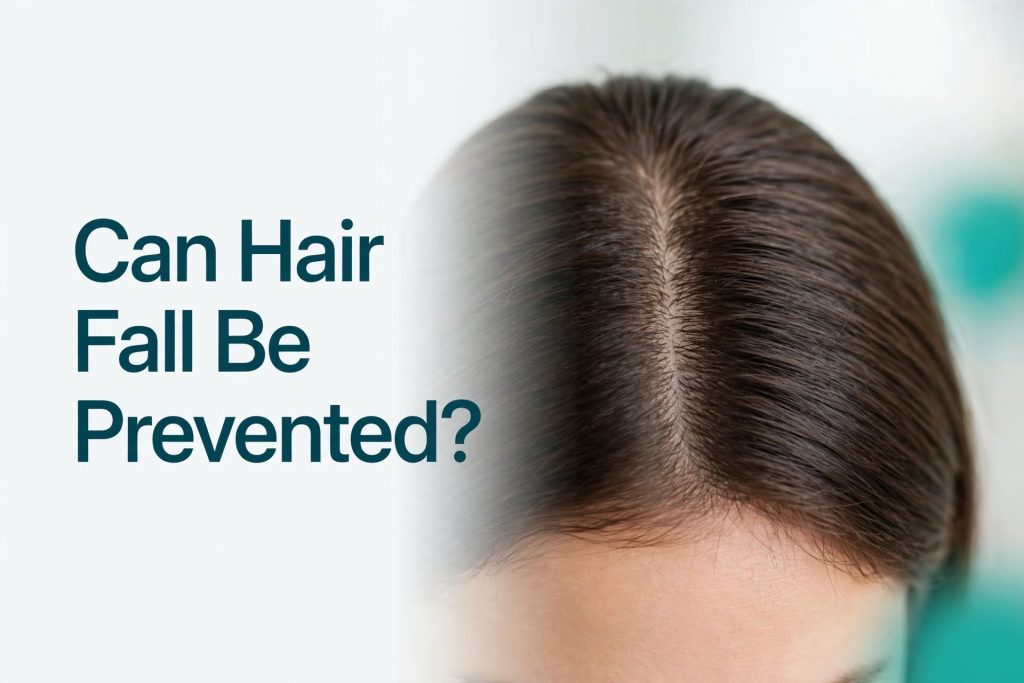
Can Hair Loss in Women Be Prevented?
Not every type of hair loss can be prevented, particularly when hereditary or medical factors are involved. However, some factors can be managed.
Maintaining a balanced diet, avoiding crash diets, managing ongoing stress, treating scalp problems, and reducing repeated tension or damage from hairstyles can support overall hair health.
Most importantly, persistent changes should not be ignored. Early attention may help identify the cause before the hair loss becomes more advanced.
Frequently Asked Questions
Common causes include hormonal changes, hereditary hair loss, stress, nutritional deficiencies, illness, scalp conditions, certain medicines, pregnancy-related changes, rapid weight loss, and repeated tension or damage to the hair.
Yes. Hormonal changes during pregnancy, after childbirth, around menopause, or with certain hormonal conditions can affect the hair growth cycle and contribute to increased shedding or thinning.
Significant physical or emotional stress can affect the hair growth cycle and lead to increased shedding. The shedding may become noticeable some time after the stressful event rather than immediately.
Yes. Certain nutritional deficiencies can contribute to hair shedding or thinning. Restrictive diets, poor nutrition, and rapid weight loss may increase the risk of nutritional problems that affect normal hair growth.
Yes. Hereditary hair loss can affect women and often appears as gradual thinning around the top of the scalp or a widening central hair part. The pattern can vary from person to person.
Yes. Hormonal changes during pregnancy and after childbirth can affect the hair cycle. Some women experience increased shedding several months after delivery, which may gradually change as the hair cycle normalizes.
Thyroid disorders can affect the hair growth cycle and may be associated with increased shedding or thinning. Hair loss alone cannot confirm a thyroid problem, so other symptoms and appropriate medical assessment are important.
Yes. Some scalp conditions, including infections and inflammatory disorders, can affect the scalp and contribute to hair loss. Hair loss accompanied by itching, redness, scaling, or soreness should be assessed.
Rapid or significant weight loss can sometimes trigger increased hair shedding. Changes in nutrition, energy intake, and the body's response to physical stress may all contribute to temporary hair changes.
A dermatology assessment is worth considering when hair loss is persistent, increasing, or accompanied by widening of the hair part, scalp visibility, bald patches, or scalp symptoms such as itching, redness, or scaling. Identifying the cause can help guide appropriate management.