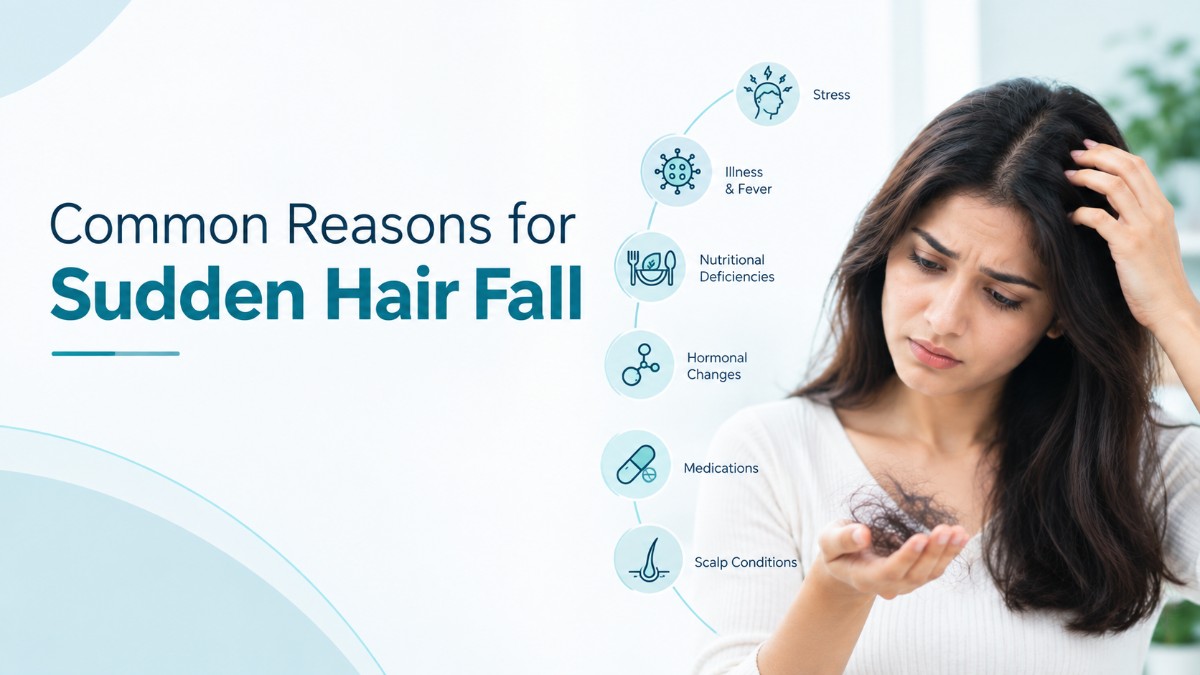
Common Reasons for Sudden Hair Fall
What Is Sudden Hair Fall?
Common Reasons for Sudden Hair Fall
There are several possible explanations for sudden or noticeably increased hair fall. Some are temporary, while others may need specific treatment.
1. Physical or Emotional Stress
Stress is one of the frequently considered Common Reasons for Sudden Hair Fall. Significant physical or emotional stress can affect the normal hair-growth cycle. A person may experience increased shedding after a period of intense stress, major emotional strain, or a substantial change in routine.
Importantly, the hair fall may not begin immediately after the stressful event. Excessive shedding associated with telogen effluvium can become noticeable several weeks or months after the triggering event.
Examples of significant stressors may include:
- Major emotional distress
- Severe physical stress
- Significant weight loss
- Major surgery
- Serious illness
- High fever
- Major lifestyle changes
The timing between the trigger and the onset of shedding can provide useful information during a dermatology consultation.
2. Recent Fever or Illness
A significant illness can temporarily affect the hair-growth cycle. Some people notice increased hair shedding after recovering from a high fever or another major illness. The body prioritizes essential functions during periods of physical stress, and hair growth can temporarily be affected.
This type of shedding may not become obvious until the illness has already resolved. Therefore, someone may feel well again but begin noticing substantial hair fall weeks or months later.
A history of recent illness is therefore an important part of evaluating sudden hair fall.
3. Nutritional Deficiencies
Nutritional factors can also contribute to hair problems. Hair follicles require adequate nutrients to support normal growth. When the body does not receive or absorb sufficient nutrients, hair growth may be affected.
Possible nutritional factors can include inadequate intake of:
- Iron
- Protein
- Certain vitamins
- Zinc
- Other essential nutrients
However, taking supplements without identifying an actual deficiency is not always appropriate. Hair fall can have many causes, and excessive supplementation may also be harmful in some situations.
If nutritional deficiency is suspected, a dermatologist may consider the person’s diet, symptoms, medical history, and appropriate laboratory investigations before recommending supplementation.
4. Hormonal Changes
Hormonal changes are another possible reason for sudden or noticeable hair fall. Changes in thyroid function, reproductive hormones, pregnancy-related hormonal shifts, and other endocrine factors can influence hair growth.
Some women experience increased shedding after pregnancy as hormonal changes affect the normal hair cycle. Similarly, thyroid disorders can be associated with changes in hair growth.
Hormonal hair loss may occur along with other symptoms, depending on the underlying condition.
These may include:
- Changes in menstrual cycles
- Unexplained weight changes
- Fatigue
- Changes in skin condition
- Increased sensitivity to temperature
- Other hormonal symptoms
When hair fall occurs together with such changes, discussing the symptoms with a dermatologist or appropriate medical professional can help identify whether further evaluation is needed.
5. Recent Surgery or Major Physical Stress
Major surgery can place considerable physical stress on the body. Some people notice increased hair shedding after recovering from an operation. This may be part of a temporary shift in the hair-growth cycle. The important point is that the hair fall may not occur immediately after surgery. There can be a delay between the physical event and noticeable shedding.
When evaluating sudden hair fall, it can therefore be useful to think back several weeks or months rather than focusing only on what happened immediately before the shedding started. A dermatologist can assess whether the timing and pattern are consistent with temporary shedding or whether another cause needs to be investigated.
6. Alopecia Areata
Alopecia areata is an autoimmune condition that can cause sudden hair loss. Unlike diffuse shedding, alopecia areata often presents as a smooth, round or oval patch of hair loss. It can affect the scalp, beard, eyebrows, eyelashes, or other hair-bearing areas.
Some people may notice:
- One or more smooth bald patches
- Sudden loss of hair in a specific area
- Eyebrow or eyelash loss
- Changes to the nails
- Itching, tingling, or burning around an affected area in some cases
Because different conditions can cause patchy hair loss, sudden bald spots should not simply be assumed to be stress-related. A dermatological examination can help identify the pattern and determine whether further evaluation or treatment is appropriate.
7. Medications and Medical Treatments
Certain medications and medical treatments can contribute to hair shedding or hair loss. The relationship between a medication and hair fall can depend on the specific drug, dose, duration of treatment, and individual response. Cancer treatments such as chemotherapy are well-known examples of treatments that can cause significant hair loss. Other medications may also contribute to shedding in some individuals.
If you suspect that a medication is associated with your hair fall, do not stop a prescribed medicine on your own. Instead, discuss the concern with the doctor who prescribed it or with a dermatologist. The timing of the medication and the onset of hair shedding can help determine whether there may be a connection.
Other Possible Reasons for Sudden Hair Fall
The Common Reasons for Sudden Hair Fall listed above are not the only possibilities.
Other factors may include:
- Hereditary hair loss
- Scalp infections
- Scalp inflammation
- Tight hairstyles
- Repeated chemical treatments
- Excessive heat or mechanical damage
- Certain autoimmune conditions
- Some systemic illnesses
- Significant hormonal changes
- Rapid or substantial weight loss
Hair loss can have more than one contributing factor at the same time. For example, a person may have an underlying tendency toward hereditary hair thinning and experience temporary increased shedding following an illness or period of significant stress.
This is one reason why identifying the pattern and history of hair fall is important rather than relying on a single suspected cause.
Is Sudden Hair Fall Always Permanent?
No. Some forms of increased hair shedding are temporary. Telogen effluvium may develop after a significant physical or emotional trigger. When the underlying trigger is resolved, the hair-growth cycle may gradually return toward normal.
However, not every type of hair loss resolves without treatment. Hereditary hair loss, alopecia areata, certain scalp disorders, and some inflammatory or scarring conditions may require medical management. Therefore, it is better not to assume that sudden hair fall will automatically stop or that every case requires long-term treatment.
How Can You Tell If Hair Fall Is Temporary?
There is no single sign that can reliably determine whether hair shedding is temporary. However, certain features can provide useful clues.
Temporary shedding may:
- Affect the scalp relatively diffusely
- Follow a noticeable physical or emotional trigger
- Begin after a delay
- Occur without obvious bald patches
- Gradually settle as the underlying trigger resolves
Other patterns may require closer evaluation, particularly when hair loss is:
- Patchy
- Rapidly progressive
- Associated with scalp inflammation
- Accompanied by eyebrow or eyelash loss
- Associated with significant thinning
- Continuing without improvement
The actual cause can only be determined through appropriate clinical assessment.
When Should You See a Dermatologist for Sudden Hair Fall?
It is reasonable to consider a dermatology consultation when hair fall is sudden, persistent, progressive, or unusually heavy. You should particularly consider professional evaluation if you notice:
- Sudden heavy shedding
- Rapid hair thinning
- Clearly visible bald patches
- Receding hairline
- Significant widening of the hair part
- Eyebrow or eyelash loss
- Scalp itching or burning
- Redness or scaling
- Scalp pain or tenderness
- Hair loss following a major illness
- Hair fall with unexplained hormonal or nutritional symptoms
These signs do not necessarily indicate a serious condition, but they can help determine whether further assessment is appropriate.
How Is Sudden Hair Fall Diagnosed?
Finding the underlying cause is an important part of managing hair fall.
A dermatologist may begin by asking about:
- When the shedding started
- Whether it developed suddenly or gradually
- Recent illness or fever
- Stressful events
- Weight changes
- Pregnancy or hormonal changes
- Diet and nutritional history
- Current medications
- Family history of hair loss
- Hair-care practices
- Scalp symptoms
The scalp and hair are then examined for clues about the type and pattern of hair loss.
Depending on the history and examination, additional investigations may sometimes be recommended. These could include blood tests when nutritional deficiency, hormonal imbalance, or another medical condition is suspected. In selected cases, additional scalp evaluation may be necessary.
What Is Telogen Effluvium?
Telogen effluvium is a form of excessive hair shedding that can occur after certain physical or emotional stressors. Normally, individual hairs move through different phases of the hair cycle. A significant trigger can cause more hairs to enter the resting phase, followed later by increased shedding.
Common triggers can include:
- High fever
- Major illness
- Surgery
- Significant emotional stress
- Major weight loss
- Childbirth
- Other substantial physical stressors
The delayed nature of this process can make it difficult to connect the hair fall with the original trigger.
A dermatologist can help determine whether the pattern is consistent with telogen effluvium or whether another form of hair loss should be considered.
What Can You Do When You Notice Sudden Hair Fall?
If you suddenly notice increased hair fall, avoid immediately trying multiple hair-loss products at the same time.
Instead:
Track the Change
Take occasional photographs under similar lighting to monitor changes in hair density and scalp visibility.
Think About Recent Triggers
Consider whether you recently experienced:
- Fever
- Illness
- Surgery
- Major stress
- Significant weight loss
- Dietary changes
- Hormonal changes
- New medication
Be Gentle With Your Hair
Avoid unnecessary pulling, aggressive brushing, excessive heat, and repeated harsh chemical treatments.
Avoid Unnecessary Supplements
Do not assume that a vitamin or supplement will correct the problem. The appropriate approach depends on the underlying cause.
Seek Professional Evaluation When Needed
If the shedding is sudden, persistent, severe, patchy, or associated with other symptoms, a dermatologist can help determine what is happening.
Hair and Scalp Evaluation at VITA Clinic
At VITA Clinic, hair and scalp concerns are approached through an individualized clinical evaluation. The clinic focuses on understanding the patient’s history, symptoms, and pattern of hair changes before considering appropriate management.
VITA Clinic is led by Dr. Sherin Dominic, MBBS, MD, DNB, Consultant Dermatologist and Aesthetic Medicine Specialist.
When sudden hair fall is being evaluated, identifying the underlying cause is an important first step. Different patterns of hair loss may require different approaches, so treatment should be based on the clinical assessment rather than the amount of hair being shed alone.
Frequently Asked Questions
1. What are the Common Reasons for Sudden Hair Fall?
Common reasons can include significant stress, recent illness or fever, surgery, nutritional problems, hormonal changes, medications, alopecia areata, and hereditary hair loss.
2. Why is my hair suddenly falling out more than usual?
Sudden increased shedding can happen after a physical or emotional trigger. Recent illness, high fever, surgery, major stress, weight loss, or hormonal changes may be contributing factors.
3. Can stress cause sudden hair fall?
Yes. Significant physical or emotional stress can affect the hair-growth cycle and may lead to increased shedding. The hair fall may become noticeable after a delay rather than immediately after the stressful event
4. Can illness cause hair fall?
Yes. Some people experience increased hair shedding after recovering from a significant illness or high fever. The shedding may appear later during the recovery period.
5. Is sudden hair fall a sign of a vitamin deficiency?
It can be associated with nutritional deficiencies, but hair fall has many possible causes. Testing and clinical assessment may be appropriate before starting supplements.
6. Can hormonal changes cause sudden hair fall?
Yes. Changes affecting hormonal balance can influence the hair-growth cycle. Thyroid disorders and reproductive hormonal changes are examples that may be considered during an evaluation.
7. What does alopecia areata hair loss look like?
Alopecia areata often begins with one or more smooth, round or oval patches of hair loss. It can also affect the eyebrows, eyelashes, beard, or other hair-bearing areas.
8. How long does temporary hair shedding last?
The duration varies depending on the cause and the individual. Some forms of temporary shedding can gradually improve after the underlying trigger has resolved.
9. Should I see a dermatologist for sudden hair fall?
A dermatology consultation can be useful when hair fall is sudden, persistent, progressive, heavy, patchy, or associated with scalp symptoms or other unexplained changes.
10. Can sudden hair fall grow back?
Some forms of hair shedding are temporary and may improve when the underlying trigger is resolved. Other types of hair loss may require specific treatment. The expected outcome depends on the cause.