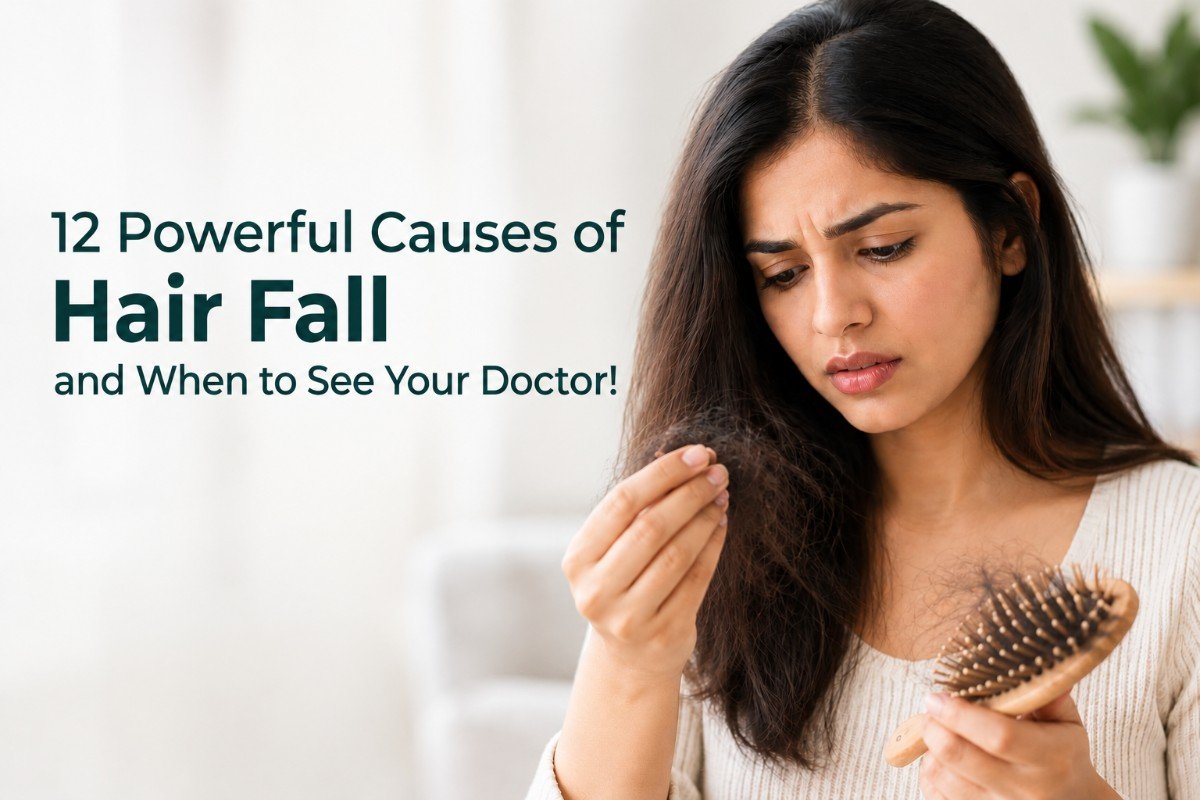
Causes of Hair Fall: 12 Powerful Reasons You Should Know Now
Causes of hair fall can range from temporary hair shedding to conditions that cause progressive hair thinning. Noticing excessive hair on your pillow, comb, or shower floor may raise concerns about your hair health. While some daily shedding is normal, persistent hair fall, visible thinning, or bald patches may require professional evaluation.
Hair loss can occur due to several factors, including genetics, stress, hormonal changes, nutritional deficiencies, illness, scalp conditions, certain medications, tight hairstyles, and excessive chemical or heat exposure. In some cases, multiple factors may contribute to hair fall simultaneously. Identifying the underlying cause is important for understanding the condition and considering suitable treatment options.
At Vita Clinic in Pala, Kottayam, the causes of hair fall are evaluated through consultation with Dr. Sherin Dominic (MBBS, MD, DNB), Consultant Dermatologist and Aesthetic Medicine Specialist. The assessment considers individual hair and scalp concerns, medical history, and possible contributing factors. Based on the clinical findings, suitable management options can be discussed according to individual needs.
What Are the Causes of Hair Fall?
The causes of hair fall are not the same for everyone. Hair may fall because of a temporary change in the hair growth cycle, an ongoing condition affecting the follicles, an internal health issue, or repeated damage to the hair and scalp.
Some common contributing factors include:
Hereditary hair loss
Stress and emotional strain
Telogen effluvium
Hair shedding after childbirth
Iron and other nutritional deficiencies
Thyroid disorders
Hormonal changes
Polycystic ovary syndrome (PCOS)
Certain medications
Scalp infections and inflammatory conditions
Tight hairstyles and traction
Chemical and heat damage
Rapid weight loss
Restrictive diets
Some autoimmune conditions
Understanding these possibilities can help distinguish temporary shedding from other forms of hair loss that may need medical attention.The causes of hair fall can vary depending on age, genetics, hormonal health, nutritional status, and individual lifestyle factors.
How Does the Hair Growth Cycle Work?
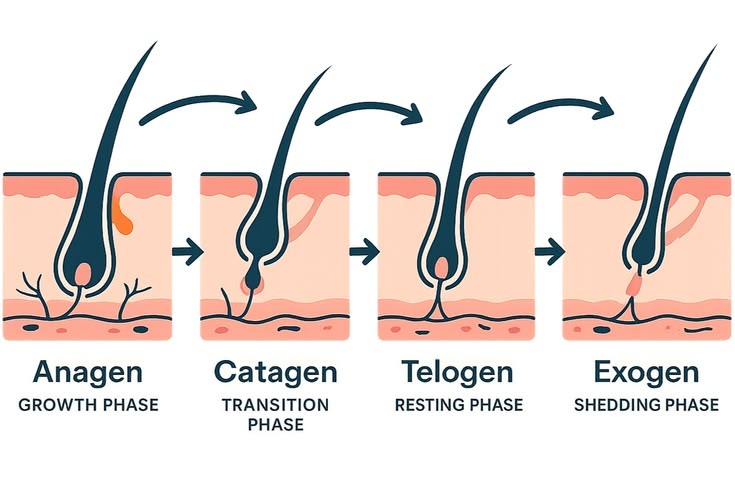
To understand hair shedding, it helps to know that every hair follicle naturally moves through different stages of growth, transition, rest, and shedding. Each follicle follows its own cycle, which is why people normally lose some hair every day without developing visible thinning.
Anagen Phase – Growth Phase
The anagen phase is the active growth stage. During this period, cells within the hair follicle produce the hair shaft, allowing the hair to grow continuously. Most scalp hairs remain in this phase for several years, although the duration can vary between individuals and may be influenced by genetics.
Catagen Phase – Transition Phase
The catagen phase is a short transition period in which active hair growth gradually slows down. The hair follicle becomes smaller and begins to separate from its blood supply as it prepares to enter the resting stage.
Telogen Phase – Resting Phase
During the telogen phase, the hair follicle remains inactive for a period of time. The existing hair stays in place while the follicle prepares for a new growth cycle. This stage is a normal part of the hair cycle.
Exogen Phase – Shedding Phase
The exogen phase is the shedding stage. During this period, an old hair is released from the follicle and eventually falls out. A new hair can then begin growing as the follicle returns to the anagen phase.
When a larger number of follicles enter the resting or shedding stages around the same time, noticeable shedding can occur. This may happen following significant stress, illness, fever, surgery, childbirth, major dietary changes, or rapid weight loss.
Understanding the hair growth cycle helps explain how different causes of hair fall can influence normal shedding and hair density.
Different Patterns of Hair Loss
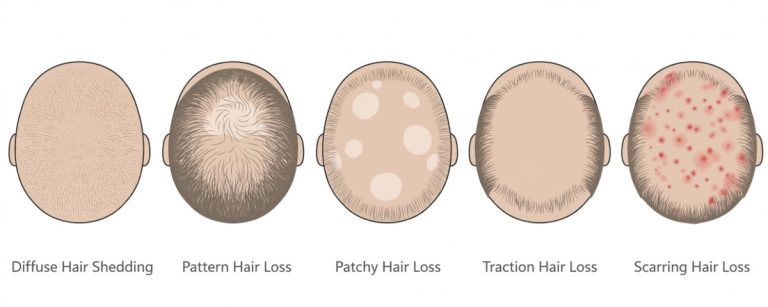
The appearance and distribution of thinning can provide useful information when investigating possible causes. Recognising the pattern is one part of a dermatological assessment.
Diffuse Hair Shedding
Diffuse hair shedding involves reduced hair density across a large part of the scalp. It may occur following stress, illness, nutritional problems, hormonal changes, or other temporary triggers.
People may notice more hair than usual during washing or brushing, along with a general reduction in volume.
Pattern Hair Loss
Pattern hair loss develops gradually in a recognisable distribution. It is commonly associated with hereditary factors and may affect the hairline, crown, or central scalp depending on the individual.
Patchy Hair Loss
Patchy hair loss occurs when hair disappears from specific areas of the scalp. Autoimmune or infectious conditions can sometimes produce this pattern.
The appearance of sudden bald patches should be evaluated to identify the underlying condition.
Traction Hair Loss
Traction hair loss develops in areas exposed to repeated pulling or tension. It commonly affects the hairline and areas where hairstyles place continuous pressure on the follicles.
Scarring Hair Loss
Scarring hair loss occurs when inflammation damages the hair follicles and replaces normal follicular tissue with scar tissue. In affected areas, future hair growth may be permanently reduced or prevented.
Early recognition is important because some scarring conditions can cause progressive follicular damage.
How Are the Causes of Hair Fall Evaluated?
A proper evaluation starts with understanding your individual history, symptoms, and pattern of hair loss. A dermatologist may ask when the shedding started, whether it developed suddenly or gradually, and whether any recent health or lifestyle changes occurred.
The assessment may include questions about:
When the hair loss started
Whether it was sudden or gradual
Family history of hair thinning
Recent illness or fever
Physical or emotional stress
Pregnancy or childbirth
Weight changes
Dietary habits
Current medications
Supplements
Hormonal changes
Scalp symptoms
Hair-care practices
The scalp and hair can then be examined to understand the distribution, density, and pattern of the loss. The dermatologist may also look for signs of inflammation, scaling, broken hairs, or changes around the follicles.
Depending on the clinical findings, additional investigations may sometimes be recommended.
These may include tests related to:
Iron status
Thyroid function
Vitamin levels
Hormonal factors
Other suspected medical causes
Not everyone experiencing hair loss needs the same investigations. Testing is generally guided by the individual’s symptoms, medical history, and examination findings.
Treatment for Hair Fall Depends on the Cause
There is no single treatment that works for every type of hair loss. The management approach depends on the underlying condition, the severity of the problem, the pattern of thinning, and the individual’s overall health.
Nutritional Causes
When a genuine nutritional deficiency is identified, correcting that deficiency may form part of the management plan.
Dietary changes or supplementation may be considered according to the specific deficiency and professional advice. Taking supplements without confirming a need may not address the actual reason for the shedding.
Scalp Conditions
Scalp infections, inflammation, dandruff-related problems, and other scalp disorders may require condition-specific treatment.
The choice of treatment depends on the diagnosis. Persistent itching, scaling, redness, or discomfort should be assessed rather than managed only with cosmetic hair products.
Hereditary Hair Loss
Certain medical treatments may be suitable for selected individuals with hereditary hair loss. The choice depends on the pattern, stage, health status, and individual needs.
A dermatologist can explain the available options, expected response, possible limitations, and whether ongoing management may be necessary.
Hormonal or Medical Causes
If an underlying medical or hormonal issue is contributing to hair loss, addressing that problem may be an important part of overall management.
This may involve further evaluation or coordination with another medical specialist when necessary.
Hair Restoration Options
Some individuals with particular types of hair thinning may be suitable for procedures such as platelet-rich plasma (PRP) treatment or hair transplantation.
These options are not appropriate for everyone. Suitability depends on the diagnosis, follicle health, available donor hair, overall health, and individual goals.
Understanding the specific causes of hair fall helps distinguish temporary shedding from conditions that may require ongoing management. Treatment decisions should therefore be based on an appropriate assessment rather than choosing a procedure simply because it is available.
Benefits of Identifying the Cause of Hair Fall
Understanding the underlying reason for hair loss can make the next steps clearer. It can also help avoid unnecessary products or treatments that may not address the actual concern.
1. Less Guesswork
You do not have to keep changing shampoos, oils, supplements, or home remedies without knowing what you are treating. Identifying possible contributing factors provides a clearer starting point for further management.
2. More Appropriate Treatment
Different types of hair loss require different approaches. A treatment suitable for hereditary hair thinning may not be appropriate for nutritional deficiencies, scalp infections, or temporary stress-related shedding.
3. Recognition of Underlying Problems
Hair loss can sometimes be associated with nutritional, hormonal, thyroid, scalp, or other medical issues. An assessment may help identify whether further investigations are necessary.
4. Better Management of Progressive Hair Loss
Some conditions may benefit from assessment before substantial thinning occurs. Early recognition can help guide decisions about suitable management and follow-up.
5. More Realistic Expectations
Knowing the diagnosis can help you understand whether improvement may occur naturally, whether treatment may be useful, or whether ongoing management may be needed.
Simple Hair-Care Tips
Not every type of hair loss can be prevented, particularly when genetic or medical factors are involved. However, certain everyday habits can help reduce avoidable damage and support general hair and scalp health.
Consider the following practices:
Avoid consistently tight hairstyles that pull on the roots.
Reduce unnecessary heat styling.
Handle wet hair gently.
Avoid aggressive brushing.
Limit repeated bleaching and chemical processing.
Maintain a balanced diet.
Include sufficient protein in your meals.
Avoid crash diets and extreme weight-loss methods.
Seek assessment for persistent scalp symptoms.
Avoid taking high-dose supplements without proper guidance.
Follow prescribed treatment as advised.
Pay attention to sudden changes in hair density.
Healthy hair care should focus on both the scalp and the hair shaft. Gentle handling, balanced nutrition, and timely attention to persistent symptoms can help reduce some avoidable forms of damage.
When Should You See a Dermatologist?
It is worth considering a dermatology consultation when hair shedding is sudden, persistent, progressive, or associated with other symptoms.
Seek professional attention when you notice:
Sudden heavy shedding
Rapid hair thinning
A widening hair part
A receding hairline
Bald patches
Eyebrow or eyelash loss
Persistent scalp itching
Redness or scaling
Scalp pain or tenderness
Hair loss after a major illness
Hair loss with hormonal or nutritional symptoms
Shedding that does not settle over time
A dermatologist can help distinguish excessive shedding from other types of hair loss and determine whether further evaluation is appropriate. Sudden patchy loss, scalp inflammation, or suspected scarring hair loss should receive particular attention.
Hair and Scalp Care at Vita Clinic
At Vita Clinic in Pala, Kottayam, hair and scalp concerns are approached with attention to the individual’s clinical history, symptoms, and hair-loss pattern.
The clinic is led by Dr. Sherin Dominic (MBBS, MD, DNB), Consultant Dermatologist and Aesthetic Medicine Specialist. Her approach combines clinical precision with an understanding of individual dermatological and aesthetic concerns.
When hair fall becomes persistent or difficult to explain, identifying the underlying reason is an important part of deciding what type of management may be suitable. A personalised dermatological assessment can help provide a clearer understanding of possible contributing factors and whether further investigations are needed.
Rather than assuming that every case is caused by stress, vitamin deficiency, or genetics, the assessment considers the individual’s symptoms and clinical findings. Based on these findings, suitable management options can be discussed according to individual needs.
Frequently Asked Questions
The main causes of hair fall include genetics, hormonal changes, stress, nutritional deficiencies, thyroid disorders, scalp conditions, certain medications, and excessive heat or chemical treatments. Identifying the underlying cause helps determine the appropriate management approach.
Yes. Losing around 50–100 hair strands daily is generally considered part of the normal hair growth cycle. However, persistent excessive shedding, noticeable thinning, or bald patches may require evaluation by a dermatologist.
Yes. Physical or emotional stress can trigger a type of hair shedding called telogen effluvium. This may cause increased hair shedding several weeks or months after a stressful event. Hair growth often improves once the triggering factor is addressed.
Yes. Inadequate intake of protein, iron, zinc, and certain vitamins may contribute to hair shedding. Restrictive diets and nutritional deficiencies can affect normal hair growth, making a balanced diet important for maintaining hair health.
Iron deficiency, particularly when it leads to iron-deficiency anaemia, may contribute to increased hair shedding. A healthcare professional may recommend blood tests to assess iron levels when deficiency is suspected.
Yes. Both an underactive thyroid (hypothyroidism) and an overactive thyroid (hyperthyroidism) can affect the hair growth cycle. Thyroid-related hair loss may improve when the underlying thyroid condition is properly managed.
Postpartum hair shedding commonly occurs due to hormonal changes after childbirth. During pregnancy, increased oestrogen levels can prolong the hair growth phase. After delivery, more hair may enter the shedding phase, usually temporarily.
Yes. Polycystic ovary syndrome (PCOS) can cause hormonal imbalances, including increased androgen activity, which may contribute to hair thinning, particularly around the crown and scalp. Individual assessment can help identify the underlying hormonal factors.
Yes. Repeatedly wearing tight hairstyles, such as tight ponytails, braids, or buns, can cause traction alopecia due to continuous pulling on the hair follicles. Early hair loss may be reversible, but prolonged traction can lead to permanent follicular damage.
Dandruff itself does not usually cause permanent hair loss. However, scalp irritation, inflammation, and frequent scratching associated with dandruff may contribute to temporary hair shedding or hair breakage. Managing the underlying scalp condition can help improve scalp health.