7 Essential Facts: Is Microneedling Safe for All Skin Types?
Is microneedling safe for all skin types? This is an important question for anyone considering microneedling treatment in Pala, especially if you have sensitive, oily, dry, acne-prone, or darker skin. Microneedling is a minimally invasive procedure that uses very fine needles to create controlled micro-injuries in the skin. These micro-injuries stimulate the body’s natural healing process and encourage collagen production. While microneedling can be suitable for many skin tones, it is not automatically appropriate for every person or every skin condition. A professional skin assessment helps determine whether the procedure is suitable and how it should be performed.
What Is Microneedling?
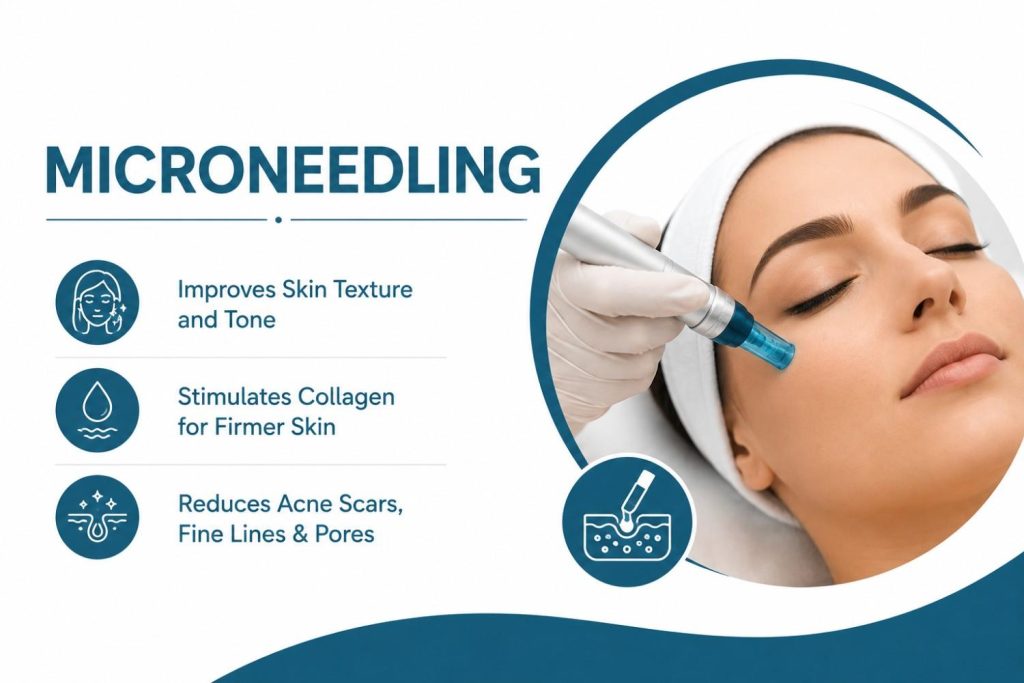
Microneedling is a collagen-induction treatment that uses a device containing fine, sterile needles. The device moves across selected areas of the skin and creates tiny, controlled channels.
The purpose is not to damage the skin extensively. Instead, these controlled micro-injuries activate a wound-healing response. During healing, the body produces and remodels collagen and other structural components.
Collagen helps provide strength and support to the skin, while elastin contributes to flexibility. As the skin remodels, its texture and appearance may gradually improve.
According to the American Academy of Dermatology, microneedling is minimally invasive and can be used for concerns including acne scars, large pores, uneven skin texture, wrinkles, and certain types of discoloration. The AAD also notes that microneedling can be safe for all skin tones when appropriately performed.
Is Microneedling Safe for All Skin Types?
The short answer is that microneedling can be safe for many different skin types and tones, but it is not suitable for everyone.
When people ask, “Is microneedling safe for all skin types?”, they are often referring to whether the procedure can be performed on fair, medium, brown, or dark skin. Skin tone alone does not necessarily prevent someone from having microneedling.
However, skin condition matters greatly.
A person with healthy skin may be an appropriate candidate, while someone with an active infection, open wound, severe irritation, or certain healing problems may need to postpone or avoid treatment.
Therefore, answering “Is microneedling safe for all skin types?” requires more than identifying whether the skin is oily, dry, combination, sensitive, or pigmented.
A qualified professional should consider:
- Skin tone and pigmentation
- Current skin condition
- Acne activity
- History of scarring
- Skin sensitivity
- Previous procedures
- Current skincare products
- Relevant medications
- Healing history
- Treatment goals
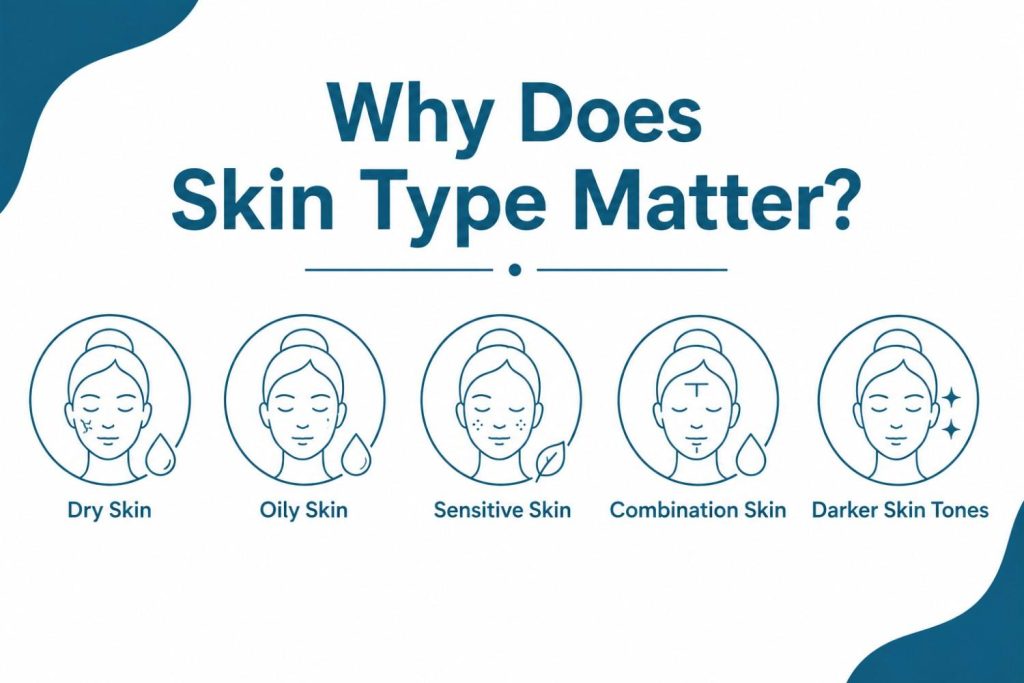
Why Does Skin Type Matter?
Different skin types can respond differently to cosmetic procedures.
- Dry Skin
Dry skin may already have a weakened or irritated skin barrier. Microneedling may still be considered in selected cases, but preparation and aftercare should be carefully planned.
Using gentle skincare and avoiding unnecessary irritation can help support recovery.
- Oily Skin
Oily skin does not automatically make microneedling unsuitable. People with oily skin may consider microneedling for acne scars, uneven texture, or enlarged-looking pores.
However, active inflammatory acne should be assessed before treatment.
- Sensitive Skin
Sensitive skin requires particular attention because it may react more strongly to mechanical stimulation or skincare products.
A professional may recommend modifying the treatment approach or postponing treatment if the skin is significantly irritated.
- Combination Skin
Combination skin can also be treated when appropriate. The important factor is not simply whether the skin is combination, but whether the treatment areas are healthy enough to undergo controlled micro-injury.
- Darker Skin Tones
One of the most common concerns is whether microneedling is appropriate for darker skin.
The AAD states that microneedling is safe for all skin tones when appropriately performed. This is one reason the treatment is often considered for people who may be concerned about pigmentation changes associated with certain resurfacing procedures.
Still, darker skin can be more prone to certain pigmentation responses after inflammation or injury. Proper treatment settings, technique, sun protection, and aftercare remain important.
Is Microneedling Safe for All Skin Types With Acne?
Microneedling may be helpful for certain acne scars, particularly depressed scars. However, active acne must be evaluated before treatment.
Acne can involve inflammation, blocked pores, bacteria, and deeper lesions. Creating additional micro-injuries over active inflammatory lesions may not be appropriate.
The AAD recommends waiting when a person has painful, pus-filled, or deep pimples, as well as certain infections or other active skin problems.
Once active acne is controlled, microneedling may become an option for selected residual scars.
What Causes the Skin Concerns Microneedling Treats?
Understanding the underlying causes can help explain why microneedling may be recommended.
- Acne Scars
Deep or inflamed acne can damage the deeper structures of the skin. During healing, insufficient collagen production can result in depressed scars.
Picking, squeezing, or scratching acne can also increase the likelihood of scarring.
- Fine Lines
With age, collagen production and skin elasticity naturally change. Repeated facial movement, sun exposure, and other environmental factors can contribute to visible fine lines.
- Enlarged-Looking Pores
Pore visibility can be influenced by genetics, oil production, skin structure, and aging. Microneedling cannot permanently remove pores, but improving the surrounding skin structure may make them appear less prominent.
- Uneven Texture
Previous acne, superficial scars, aging, and changes in collagen structure can contribute to uneven texture.
Microneedling encourages collagen remodeling, which may gradually improve surface smoothness.
Types of Skin Concerns and Their Symptoms
Microneedling is not a treatment for one single condition. It can be considered for several cosmetic concerns.
Acne Scar Symptoms
Acne scars may appear as:
- Rolling depressions
- Boxcar depressions
- Small deep ice-pick scars
- Uneven skin texture
- Certain raised scars
Different scar types respond differently to treatment. The AAD notes that acne scar treatment should be selected according to the type of scar present.
7 Benefits of Microneedling
If you are wondering, is microneedling safe for all skin types and why people choose it, understanding its potential benefits is useful.
1. Supports Collagen Production
The controlled micro-injuries encourage the body’s natural healing process. This can stimulate collagen production and remodeling.
2. May Improve Acne Scars
Microneedling is commonly used for certain depressed acne scars. New collagen can gradually make some scars less noticeable.
3. Improves Skin Texture
Uneven or rough skin texture may become smoother as the skin undergoes remodeling.
4. May Reduce Fine Lines
Collagen stimulation can support improvements in mild fine lines and early signs of skin aging.
5. May Minimize the Appearance of Pores
Microneedling does not remove pores, but improved skin structure can make enlarged-looking pores less noticeable.
6. Can Be Used on Different Skin Tones
Microneedling can be appropriate for a wide range of skin tones when properly performed. The AAD specifically states that microneedling is safe for all skin tones.
7. Usually Has Limited Downtime
Compared with some more aggressive resurfacing procedures, conventional microneedling generally has relatively limited recovery. Temporary redness, swelling, tenderness, or a sunburn-like sensation can occur.
Who Should Avoid or Postpone Microneedling?
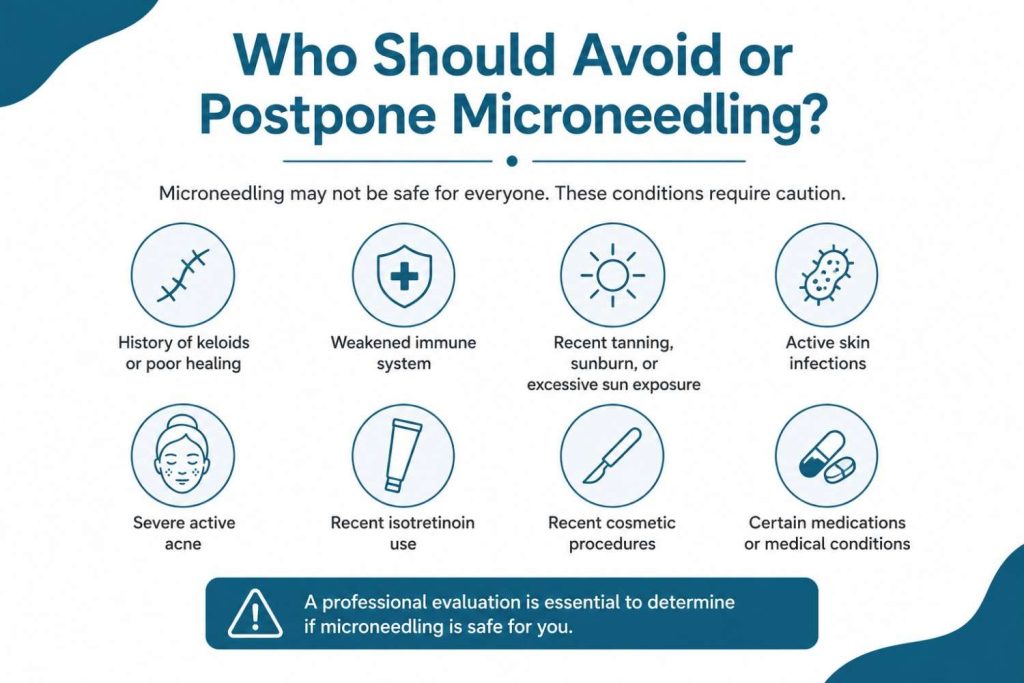
Although microneedling can be appropriate for many people, certain situations require caution.
The AAD advises against microneedling for people with certain conditions, including poor healing, a history of keloids, weakened immune systems, skin cancer in the treatment area, or radiation treatment. Treatment may also need to be delayed for recent tanning, sunburn, skin infection, certain active acne lesions, or recent isotretinoin use.
A provider should know about:
- Previous keloids or problematic scars
- Active skin infections
- Open wounds
- Significant inflammation
- Severe active acne
- Recent cosmetic procedures
- Certain medications
- Problems with wound healing
- Relevant medical conditions
This is why the question is microneedling safe for all skin types should always be answered after evaluating the individual rather than relying only on general skin-type categories.
Is Microneedling Safe for All Skin Types at Home?
Professional treatment and at-home microneedling are not the same.
The AAD explains that at-home microneedling products generally do not penetrate the skin in the same way as professional medical devices. If an at-home device does pierce the skin, there is a risk of infection, scarring, pigmentation changes, and spreading infections such as herpes or warts.
For deeper microneedling, professional evaluation and sterile technique are particularly important.
Conclusion
So, is microneedling safe for all skin types? It can be a suitable option for many people across different skin tones and skin types, but safety depends on the condition of the skin, treatment technique, medical history, and appropriate aftercare. A professional evaluation is the safest way to determine whether microneedling is appropriate for your individual needs. If you are considering microneedling treatment in Pala, discuss your skin type, concerns, medications, previous treatments, and expected results with a qualified skin-care professional before proceeding.According to the American Academy of Dermatology (AAD), microneedling can stimulate collagen production and help improve the appearance of acne scars, fine lines, wrinkles, and uneven skin texture.