7 Powerful Benefits of Microneedling Treatment in Pala Today
Microneedling treatment in Pala is a minimally invasive skin rejuvenation procedure designed to improve acne scars, uneven skin texture, enlarged pores, fine lines, and other common skin concerns. For people in Pala looking for a procedure that works with the skin’s natural repair process, microneedling offers a versatile option with relatively limited downtime. The treatment uses very fine, sterile needles to create controlled micro-injuries in the skin. These tiny channels stimulate the natural healing response and encourage collagen and elastin production, gradually helping the skin appear smoother, firmer, and more even
What Is Microneedling Treatment
Microneedling is a cosmetic dermatology procedure in which a specialized device containing multiple fine needles is moved across targeted areas of the skin. These needles create microscopic punctures at carefully controlled depths.
Although these microchannels are very small, they trigger the skin’s natural repair mechanisms. As part of this response, the skin begins remodeling tissue and producing structural proteins, including collagen and elastin.
Collagen contributes to skin strength and firmness, while elastin helps maintain flexibility. Because the procedure stimulates these natural processes rather than simply covering imperfections, improvements usually develop progressively.
Microneedling treatment may be considered for concerns such as:
- Acne scars
- Uneven or rough skin texture
- Enlarged pores
- Fine lines
- Mild wrinkles
- Certain superficial scars
- Dull-looking skin
- Mild loss of firmness
- Some forms of uneven skin tone
The suitability of microneedling depends on skin condition, medical history, treatment goals, and whether there are active skin problems.
How Does Microneedling Treatment in Pala Work
Microneedling treatment in Pala works through a process known as controlled skin injury and remodeling. Instead of causing significant damage, the device creates numerous microscopic channels while leaving much of the surrounding tissue intact.
The body recognizes these channels as minor injuries and begins a healing response.
Initial Healing Response
Immediately following treatment, the body activates mechanisms involved in repairing the treated tissue. Temporary redness, warmth, or mild swelling can occur during this stage.
Collagen Production
As healing progresses, cells involved in tissue repair become active. New collagen and other structural components are gradually produced.
Skin Remodeling
Over the following weeks, collagen remodeling may improve the structure and appearance of the treated skin. This gradual process is one reason microneedling results are generally not immediate.
Multiple sessions may be recommended when treating deeper acne scars or significant textural irregularities.
Skin Concerns Treated With Microneedling
Microneedling is commonly chosen because a single procedure can address several skin concerns. However, the expected degree of improvement varies depending on the condition being treated.
Acne Scars
Atrophic acne scars develop when the skin does not produce enough tissue during the healing of acne lesions. This can leave depressions or uneven areas.
Microneedling may stimulate collagen remodeling beneath these scars, gradually improving their appearance.
Different acne scar types can respond differently. A professional skin assessment is therefore important before treatment.
Enlarged Pores
Visible pores can become more noticeable because of genetics, oil production, aging, or changes in skin structure.
By supporting collagen formation around the skin, microneedling may make pores appear less prominent.
Fine Lines
Collagen levels naturally change with age. This can contribute to fine lines and reduced firmness.
Microneedling stimulates collagen remodeling, which may gradually improve the appearance of mild lines and early signs of skin aging.
Uneven Skin Texture
Roughness, minor scars, and irregular skin texture can affect how smooth the skin looks and feels.
Microneedling may improve overall texture by encouraging tissue renewal and remodeling.
Mild Skin Laxity
The collagen-stimulating effect of microneedling may provide modest improvements in skin firmness. However, it should not be considered a substitute for procedures intended to address significant skin laxity.
Types of Microneedling Treatments
Different forms of microneedling are available. The appropriate approach depends on the treatment objective and skin characteristics.
Traditional Microneedling
Traditional microneedling uses a mechanical pen or similar device fitted with sterile needles.
The depth of penetration may be adjusted according to the treatment area and skin concern.
Microneedling for Acne Scars
When treating acne scars, treatment parameters may differ from those used for general skin rejuvenation.
Scar depth, type, distribution, and skin characteristics are considered when developing a treatment plan.
Microneedling for Skin Rejuvenation
This approach focuses on improving overall skin quality, including texture, fine lines, and the appearance of pores.
Combination Treatments
In selected situations, microneedling may form part of a broader skin treatment plan. Whether combination therapy is appropriate should be determined after professional assessment because adding procedures can also change downtime and potential risks.
7 Powerful Benefits of Microneedling Treatment in Pala
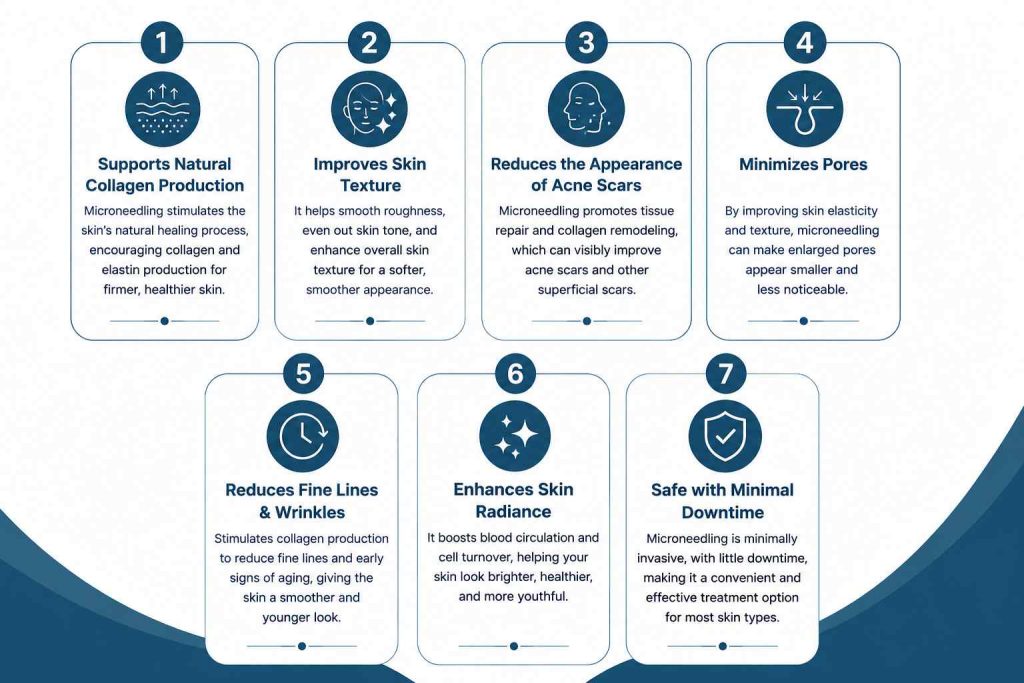
Microneedling treatment in Pala may provide several cosmetic benefits when it is appropriately selected and performed.
1. Supports Natural Collagen Production
One of the primary purposes of microneedling is collagen induction.
The controlled micro-injuries encourage the body’s natural repair process, supporting the production and remodeling of collagen within treated skin.
2. May Improve Acne Scars
Microneedling is frequently used for certain depressed acne scars.
As collagen develops and remodels beneath the scarred area, some scars may become less noticeable over time. The outcome depends considerably on scar type and severity.
3. Improves Skin Texture
Irregular texture can make the skin look rough or uneven.
By encouraging skin remodeling, microneedling may create a smoother and more refined appearance over a series of treatments.
4. May Reduce the Appearance of Fine Lines
The collagen-induction process can help improve mild fine lines and early textural signs associated with skin aging.
Results usually develop gradually rather than immediately after the procedure.
5. Can Minimize the Appearance of Pores
Microneedling cannot permanently eliminate pores because pores are a normal part of the skin.
However, improvements in surrounding skin texture and structure may make enlarged pores appear less noticeable.
6. Suitable for Different Treatment Areas
Although commonly performed on the face, microneedling can sometimes be used on other appropriate areas where scars or textural concerns are present.
The device settings and treatment approach need to be adjusted for each area.
7. Relatively Limited Downtime
Compared with some more intensive resurfacing procedures, conventional microneedling often involves relatively limited recovery time.
Redness and sensitivity are common immediately afterward and generally improve as the skin recovers.
What Happens During a Microneedling Procedure
Understanding the procedure can make it easier to know what to expect from microneedling treatment.
Skin Assessment
Treatment should begin with an evaluation of the skin.
The assessment may consider:
- Primary skin concerns
- Acne scar type
- Skin sensitivity
- Current skincare products
- History of skin conditions
- Previous cosmetic procedures
- Current medications where relevant
- Expected treatment outcome
This step helps determine whether microneedling is suitable.
Skin Preparation
The treatment area is thoroughly cleansed. A topical numbing product may be applied before the procedure to improve comfort.
Microneedling
A sterile microneedling device is passed systematically over the treatment area.
Needle depth can be adjusted depending on the skin concern and treatment area. Treating superficial texture, for example, may require a different approach from treating deeper scars.
Post-Treatment Care
After the procedure, the skin may look red and feel sensitive. Appropriate aftercare instructions are provided to protect the recovering skin.
What Does Microneedling Feel Like
The sensation experienced during microneedling varies according to treatment depth, area, individual sensitivity, and whether topical anesthesia is used.
Some people describe sensations such as mild scratching, vibration, pressure, or temporary discomfort.
Certain facial areas with less soft tissue may feel more sensitive.
After treatment, the skin can feel warm or mildly tender, similar to a superficial sunburn. These effects are generally temporary.
Severe or persistent symptoms should be professionally evaluated.
Microneedling Treatment for Acne Scars
Acne scarring is one of the most common reasons people consider microneedling.
When inflammatory acne damages deeper layers of the skin, the healing process can leave permanent changes in texture.
Microneedling creates controlled microchannels within scarred areas. The resulting repair response may encourage collagen remodeling beneath depressed scars.
However, acne scars are not all identical.
Common atrophic scar patterns include:
- Rolling scars
- Boxcar scars
- Ice-pick scars
Different scar types can require different treatment strategies. Some may respond well to microneedling, while others may require alternative or combination procedures.
Active inflammatory acne also needs to be considered before performing microneedling.
Microneedling for Fine Lines and Skin Aging
Natural aging and environmental factors can gradually alter the skin’s collagen structure.
This may lead to:
- Fine lines
- Rough texture
- Reduced elasticity
- Mild loss of firmness
- Dull appearance
Microneedling treatment stimulates a controlled repair response intended to support collagen remodeling.
Because collagen formation takes time, changes generally develop progressively during the weeks following treatment.
The procedure is therefore better viewed as a gradual skin rejuvenation method rather than an instant transformation.
Who May Consider Microneedling
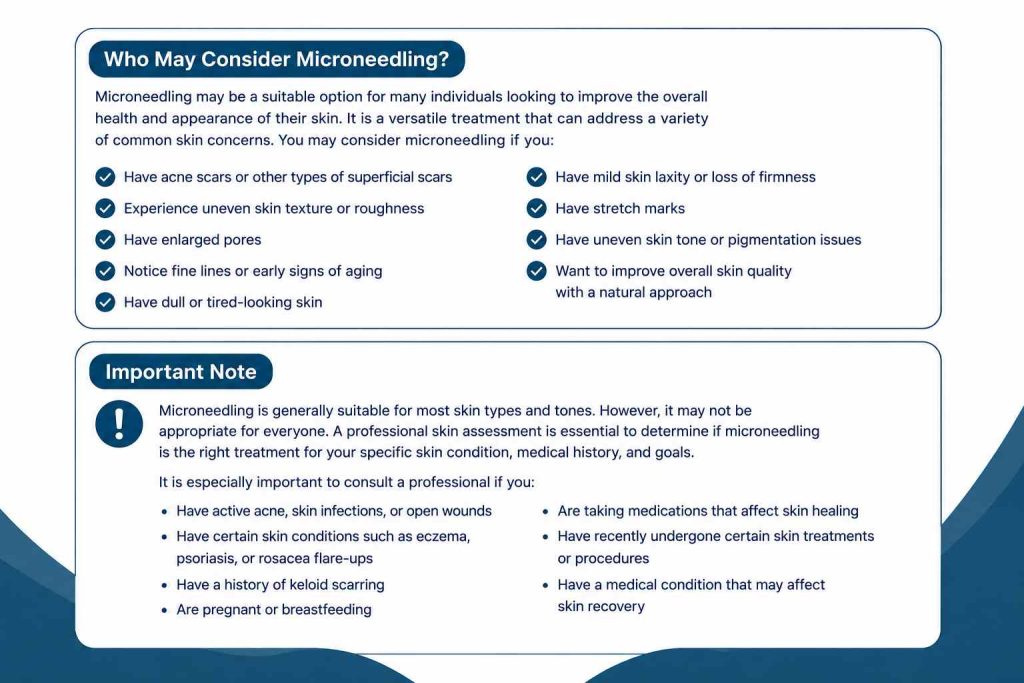
Microneedling may be considered by adults concerned about acne scars, texture, pores, fine lines, or certain other superficial skin irregularities.
However, treatment is not automatically appropriate for everyone.
Professional assessment is particularly important for people with:
- Active acne outbreaks
- Active skin infections
- Open wounds
- Significant skin irritation
- Certain inflammatory skin disorders
- A tendency toward problematic scarring
- Recent procedures affecting skin healing
- Certain medical conditions or medications affecting healing
A complete history allows potential risks and benefits to be considered before proceeding.
Preparing for Microneedling Treatment
Proper preparation can reduce unnecessary irritation and support recovery.
Before a session, follow the specific instructions provided by the treating professional.
General preparation may include:
- Protecting the skin from excessive sun exposure
- Avoiding unnecessary irritation
- Informing the provider about medications
- Discussing active skincare products
- Reporting previous reactions to cosmetic treatments
- Avoiding treatment over infected or damaged skin
- Arriving with clean skin when instructed
Do not discontinue prescription medication solely for a cosmetic procedure without guidance from the relevant healthcare professional.
Microneedling Aftercare Tips
Aftercare is an important part of microneedling treatment because the skin barrier needs time to recover.
Keep the Skin Gentle and Clean
Use gentle skincare products as advised. Avoid aggressive rubbing, scrubbing, or exfoliating immediately after treatment.
Avoid Picking the Skin
Temporary dryness or mild flaking may develop. Picking or peeling the skin can increase irritation.
Protect the Skin From Sun Exposure
Recently treated skin can be more sensitive. Appropriate sun protection is therefore particularly important during recovery.
Avoid Strong Active Ingredients Initially
Retinoids, exfoliating acids, and other potentially irritating products may need to be temporarily avoided.
The appropriate timing for restarting these products depends on skin recovery and professional advice.
Follow Individual Instructions
Treatment depth varies between patients, so recovery recommendations may also differ.
Following individualized aftercare instructions is preferable to relying on a generic skincare routine.
Possible Side Effects and Risks
Microneedling is minimally invasive, but it can still cause side effects.
Common temporary effects can include:
- Redness
- Mild swelling
- Tenderness
- Dryness
- Tightness
- Temporary sensitivity
- Minor flaking
Less common complications can include infection, prolonged inflammation, changes in pigmentation, or scarring.
Using sterile equipment, appropriate treatment parameters, and proper aftercare helps reduce avoidable risks.
Anyone experiencing worsening pain, significant swelling, pus, persistent redness, or other concerning symptoms after treatment should seek professional assessment.
How Many Microneedling Sessions Are Needed
There is no universal number of sessions suitable for every person.
The treatment plan depends on factors including:
- Type of skin concern
- Severity of acne scars
- Treatment depth
- Skin response
- Desired improvement
- Healing capacity
- Previous procedures
General skin rejuvenation may require a different treatment schedule from deeper acne scar management.
Sessions are usually spaced apart to provide adequate time for skin healing and collagen remodeling.
When Can Microneedling Results Be Seen
Microneedling results generally develop gradually because the procedure depends partly on the body’s natural repair and collagen-remodeling processes.
The skin may initially appear temporarily smoother after the immediate redness resolves, but collagen-related changes take longer.
Improvement can continue over subsequent weeks.
For acne scars and more significant textural concerns, a series of appropriately spaced treatments may be recommended before meaningful changes become apparent.
Results also vary between individuals, so a guaranteed degree of improvement should not be expected.
Tips for Getting Better Results From Microneedling
Good outcomes depend on more than the procedure itself.
Helpful practices include:
- Follow pre-treatment instructions carefully.
- Avoid unnecessary irritation before treatment.
- Follow recommended post-treatment skincare.
- Protect treated skin from excessive UV exposure.
- Avoid picking or scratching recovering skin.
- Attend follow-up appointments when recommended.
- Allow sufficient time between treatment sessions.
- Maintain realistic expectations about gradual improvement.
Consistency with an appropriate treatment and skincare plan can help support long-term skin quality.
Conclusion
Microneedling treatment in Pala is a collagen-induction procedure that may help improve acne scars, enlarged-looking pores, fine lines, rough texture, and other selected skin concerns. Its main advantage is that it uses controlled micro-injuries to activate the skin’s own healing and remodeling mechanisms rather than relying solely on surface-level correction. Appropriate assessment, sterile technique, realistic expectations, and careful aftercare are essential for safe treatment. If you are considering microneedling treatment in Pala, a professional skin evaluation can determine whether the procedure is appropriate for your skin condition and treatment goals. According to the American Academy of Dermatology (AAD), microneedling can stimulate collagen production and help improve the appearance of acne scars, fine lines, wrinkles, and uneven skin texture.
Table of Contents
WHAT IS MICRONEEDLING
Microneedling is a minimally invasive skin treatment that uses fine needles to create tiny micro-injuries, stimulating the body’s natural collagen and elastin production. It helps improve the appearance of acne scars, fine lines, wrinkles, enlarged pores, and overall skin texture with minimal downtime.
Learn More
HOW DOES MICRONEEDLING WORK
Microneedling works by creating tiny controlled micro-injuries in the skin, which trigger the body’s natural healing process and stimulate collagen and elastin production. This renewal process helps improve skin texture, reduce scars and wrinkles, and promote healthier, firmer-looking skin.
Read More
WHAT ARE THE BENEFITS OF MICRONEEDLING
Microneedling offers a wide range of skin benefits, including improved collagen production, smoother texture, and a more even complexion. It is commonly used to reduce the appearance of acne scars, fine lines, wrinkles, enlarged pores, and other signs of skin aging.
View More