
7 Powerful Facts: Can Pigmentation Be Treated Permanently
Skin pigmentation is one of the most common cosmetic concerns affecting people of all ages. If you have ever wondered, can pigmentation be treated permanently, you are not alone. Many individuals notice dark patches, uneven skin tone, or stubborn spots that seem difficult to remove. In Thrissur, advanced skincare treatments and proper skin care routines have made managing pigmentation more effective than ever.
The answer to can pigmentation be treated permanently depends on several factors, including the type of pigmentation, its underlying cause, your skin type, and the treatment method chosen. While many forms of pigmentation can be significantly reduced or even eliminated, maintaining results often requires ongoing sun protection and skincare.
Understanding Skin Pigmentation
To understand can pigmentation be treated permanently, it helps to know what pigmentation actually is.
Pigmentation refers to the color of your skin, which is determined by melanin. Melanin is produced by specialized cells called melanocytes. When these cells produce too much melanin, darker patches or spots appear.
Pigmentation may develop gradually or suddenly and can affect small or large areas of the skin.
Common pigmentation concerns include:
- Sun spots
- Age spots
- Melasma
- Post-inflammatory hyperpigmentation
- Freckles
- Uneven skin tone
Can Pigmentation Be Treated Permanently
Many people ask, can pigmentation be treated permanently after trying multiple creams or home remedies.
The simple answer is:
Yes, some forms of pigmentation can be treated permanently, while others require maintenance.
The outcome depends on:
- Type of pigmentation
- Depth of pigment
- Cause of discoloration
- Skin type
- Treatment method
- Lifestyle habits
- Sun exposure
Certain superficial pigmentation responds extremely well to treatment, whereas hormonal pigmentation like melasma may return if triggers remain.
What Causes Pigmentation
Understanding the cause helps determine whether pigmentation can be permanently reduced.
Sun Exposure
Ultraviolet rays stimulate melanin production, leading to:
- Sunspots
- Age spots
- Uneven skin tone
Hormonal Changes
Hormonal fluctuations may trigger:
- Melasma
- Pregnancy mask
- Hormonal pigmentation
Acne
After pimples heal, dark marks may remain.
This is called post-inflammatory hyperpigmentation.
Skin Injuries
Pigmentation may develop after:
- Burns
- Cuts
- Rashes
- Allergic reactions
Aging
As skin ages, pigment-producing cells become uneven, resulting in age spots.
Genetics
Some individuals naturally develop freckles or pigmentation due to inherited traits.
Certain Medications
Some medicines increase sensitivity to sunlight, making pigmentation more likely.
Types of Pigmentation
Melasma
Melasma appears as symmetrical brown patches, usually on:
- Forehead
- Cheeks
- Upper lip
- Chin
Hormones and sunlight are major triggers.
Sunspots
Also called solar lentigines, these develop after years of UV exposure.
Post-Inflammatory Hyperpigmentation
Occurs after skin inflammation caused by:
- Acne
- Eczema
- Psoriasis
- Injuries
Freckles
Small brown spots commonly inherited through genetics and intensified by sun exposure.
Age Spots
Typically appear after the age of 40 due to cumulative sun damage.
Symptoms of Pigmentation
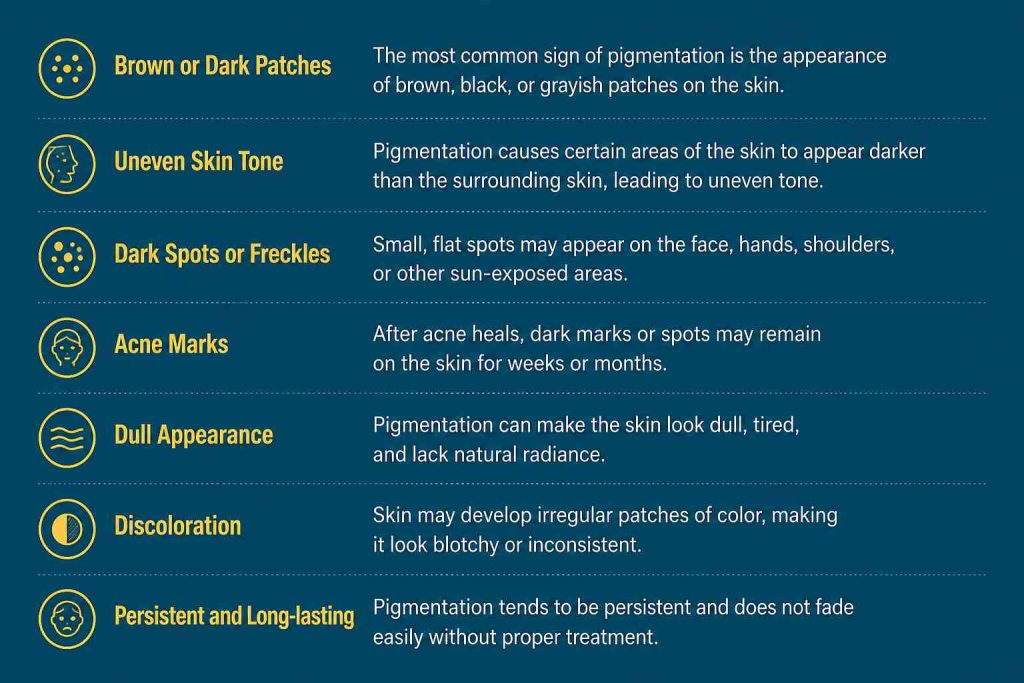
Signs include:
- Brown patches
- Black spots
- Uneven complexion
- Discoloration
- Flat dark areas
- Persistent acne marks
- Changes in skin color
Pigmentation usually causes no pain but may affect confidence.
Factors That Affect Permanent Treatment
When considering can pigmentation be treated permanently, several factors influence success.
Type of Pigmentation
Some types respond much better than others.
Skin Tone
Different skin tones require personalized treatment approaches.
Duration
Older pigmentation generally requires longer treatment.
Sun Protection
Without sunscreen, pigmentation often returns.
Hormonal Balance
Persistent hormonal changes may trigger recurring pigmentation.
Diagnosis of Pigmentation
A skincare professional may evaluate:
- Medical history
- Skin examination
- Pigmentation pattern
- Wood’s lamp examination
- Dermatoscopy
- Skin biopsy (rarely)
Accurate diagnosis helps choose the most effective treatment.
Treatments for Pigmentation
Several modern treatments help answer the question: can pigmentation be treated permanently.
Topical Creams
Prescription creams may contain ingredients such as:
- Hydroquinone
- Retinoids
- Azelaic acid
- Kojic acid
- Vitamin C
- Niacinamide
These gradually reduce pigmentation.
Chemical Peels
Chemical peels remove damaged skin layers.
Benefits include:
- Brighter complexion
- Reduced dark spots
- Improved skin texture
- Even skin tone
Laser Treatment
Laser technology targets excess melanin while preserving surrounding skin.
Benefits include:
- Precision
- Faster improvement
- Long-lasting results
- Minimal downtime in selected cases
Microneedling
Microneedling stimulates skin renewal and collagen production while improving pigmentation.
Microdermabrasion
This treatment gently exfoliates superficial pigmentation and enhances skin brightness.
Medical Facials
Professional facials support pigmentation treatment by improving skin renewal and hydration.
Combination Therapy
Many people achieve better results through a combination of:
- Creams
- Chemical peels
- Laser therapy
- Microneedling
- Sun protection
Can Home Remedies Remove Pigmentation Permanently
Natural remedies may slightly improve skin appearance but rarely eliminate pigmentation permanently.
Popular home remedies include:
- Aloe vera
- Yogurt
- Turmeric
- Green tea extract
- Potato juice
These should never replace professional treatment for stubborn pigmentation.
Benefits of Professional Pigmentation Treatment
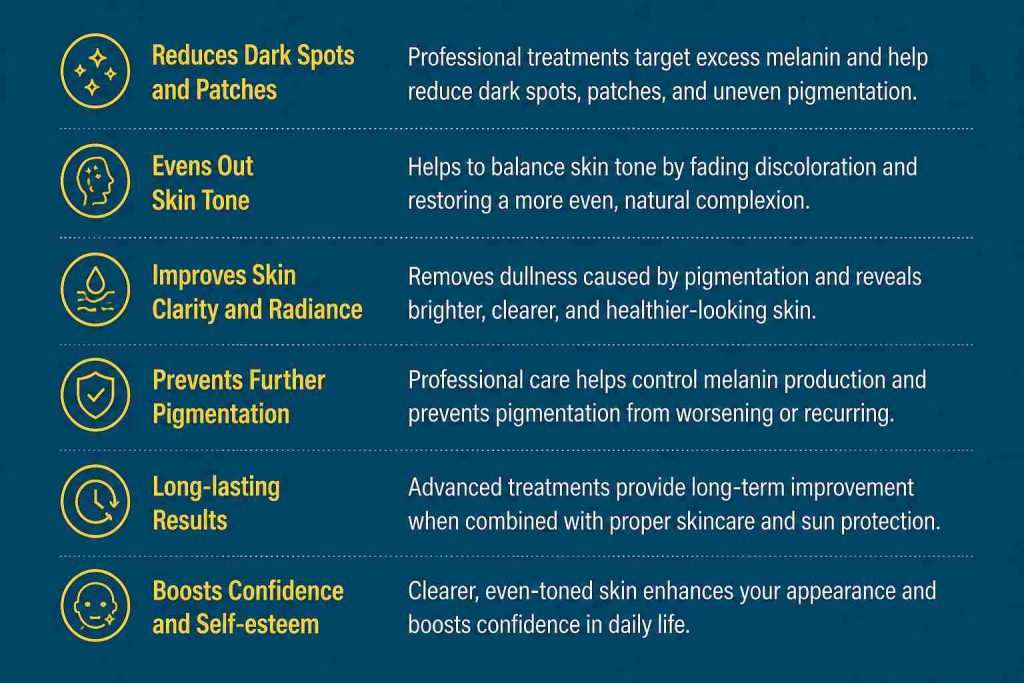
Professional care offers several advantages.
More Accurate Diagnosis
Treatment matches the exact type of pigmentation.
Better Results
Medical treatments penetrate deeper than over-the-counter products.
Improved Skin Texture
Many procedures also improve skin quality.
Reduced Recurrence
Professionals recommend maintenance plans.
Increased Confidence
Even skin tone often improves self-esteem.
Daily Skincare Tips
Proper skincare supports lasting results.
Follow these habits:
- Wear sunscreen every day.
- Reapply SPF every two to three hours outdoors.
- Avoid harsh scrubbing.
- Moisturize daily.
- Stay hydrated.
- Eat antioxidant-rich foods.
- Avoid picking acne.
- Use gentle cleansers.
- Follow prescribed treatments consistently.
Foods That Support Healthy Skin
Nutrition contributes to healthier skin.
Include:
- Citrus fruits
- Berries
- Leafy vegetables
- Tomatoes
- Nuts
- Seeds
- Fish
- Eggs
- Avocados
Antioxidants help reduce oxidative stress that may worsen pigmentation.
When Should You Seek Professional Care
Consider professional evaluation if:
- Pigmentation spreads rapidly.
- Dark patches change appearance.
- Home treatments fail.
- Pigmentation affects confidence.
- Spots become darker.
- Symptoms persist for months.
Early treatment often provides better results.
Common Myths About Pigmentation
Myth 1: Pigmentation Always Disappears Naturally
Many cases require professional treatment.
Myth 2: Sunscreen Is Needed Only Outdoors
UV rays can affect skin even indoors through windows.
Myth 3: One Treatment Removes All Pigmentation
Multiple sessions are often necessary.
Myth 4: Natural Remedies Work Faster
Scientific treatments generally provide more reliable results
Myth 5: Pigmentation Never Returns
Certain conditions, especially melasma, may recur without proper maintenance.
Prevention Tips
Although not every case can be prevented, these habits reduce risk:
- Wear broad-spectrum sunscreen.
- Avoid excessive sun exposure.
- Wear protective clothing.
- Treat acne early.
- Follow a skincare routine.
- Avoid harsh products.
- Maintain healthy nutrition.
- Stay hydrated.
- Sleep adequately.
- Manage stress.
Conclusion
If you have been asking, can pigmentation be treated permanently, the answer is encouraging. Many pigmentation concerns respond extremely well to modern skincare treatments when combined with proper diagnosis, sun protection, and consistent skin care. The most effective approach depends on identifying the underlying cause and choosing the right treatment plan. With professional guidance, healthy lifestyle habits, and ongoing maintenance where needed, clearer and more even-toned skin is an achievable goal. Individuals seeking treatment in Thrissur can benefit from advanced dermatological care and personalized solutions for lasting skin improvement. For more information about skin pigmentation and hyperpigmentation, visit the American Academy of Dermatology
Frequently Asked Questions
Can pigmentation be treated permanently
Some pigmentation can be permanently removed, while others require maintenance depending on the underlying cause.
Does laser treatment permanently remove pigmentation
Laser treatment provides long-lasting improvement for many types of pigmentation but maintenance may still be required.
Is pigmentation dangerous
Most pigmentation is harmless, but sudden changes should be evaluated.
How long does treatment take
Results may appear within weeks, while deeper pigmentation may require several months.
Can sunscreen prevent pigmentation
Yes. Daily sunscreen is one of the most effective preventive measures.
Does pigmentation return
Some conditions like melasma can recur with sun exposure or hormonal changes.
Which treatment works best
The best treatment depends on the type and severity of pigmentation.
Can acne marks disappear permanently
Many acne marks improve significantly with appropriate treatment.
Is pigmentation treatment painful
Most modern treatments involve minimal discomfort.
Who is suitable for pigmentation treatment
Anyone with persistent pigmentation should undergo professional skin assessment to determine suitable treatment options.