7 Proven Pigmentation Treatment Recovery Time Tips for Skin Care
Pigmentation concerns affect many people and can develop due to sun exposure, hormonal changes, aging, acne, or skin injuries. If you are planning a skin procedure or have recently undergone one in Thrissur, understanding Pigmentation Treatment Recovery Time is essential for achieving the best possible results. Recovery varies depending on the treatment, your skin type, and how well you follow aftercare instructions. With proper care, your skin can heal smoothly while reducing the chances of irritation, infection, or recurrence of pigmentation.
What Is Pigmentation
Pigmentation refers to the natural coloring of the skin caused by melanin. When melanin production becomes uneven, dark patches or spots may appear. These changes may affect the face, neck, hands, or other parts of the body.
Common pigmentation conditions include:
- Melasma
- Sunspots
- Age spots
- Post-inflammatory hyperpigmentation
- Freckles
- Uneven skin tone
Several modern skin treatments help reduce pigmentation and improve overall skin appearance.
Understanding Pigmentation Treatment Recovery Time
Pigmentation Treatment Recovery Time refers to the healing period after undergoing a skin treatment designed to reduce unwanted pigmentation. During recovery, the skin repairs itself, old pigmented cells shed naturally, and healthier skin gradually appears.
The recovery period depends on:
- Type of treatment performed
- Depth of pigmentation
- Individual skin healing ability
- Skin sensitivity
- Age
- Lifestyle habits
- Post-treatment skincare routine
Most people notice gradual improvements over several weeks, while complete healing may take longer for deeper pigmentation.
Why Recovery Time Varies
Every person’s skin heals differently. Even if two individuals receive the same treatment, their Pigmentation Treatment Recovery Time may not be identical.
Factors affecting recovery include:
- Skin type
- Existing medical conditions
- Immune response
- Daily sun exposure
- Hydration levels
- Smoking
- Nutrition
- Proper skincare after treatment
Following professional aftercare recommendations significantly improves healing.
Common Causes of Pigmentation
Pigmentation develops due to various reasons.
Sun Exposure
Ultraviolet rays stimulate melanin production, leading to dark patches.
Hormonal Changes
Pregnancy and hormonal fluctuations may trigger melasma.
Acne
Acne often leaves behind dark marks after inflammation subsides.
Aging
Natural aging may cause age spots over time.
Skin Injuries
Burns, cuts, or cosmetic procedures can result in post-inflammatory pigmentation.
Certain Medications
Some medications increase skin sensitivity and pigmentation.
Types of Pigmentation
Melasma
Usually appears as symmetrical brown patches on the face.
Sunspots
Caused by prolonged ultraviolet exposure.
Post-Inflammatory Hyperpigmentation
Develops after acne, eczema, burns, or injuries.
Age Spots
Common in older adults due to cumulative sun exposure.
Freckles
Small brown spots influenced by genetics and sunlight.
Symptoms That May Need Pigmentation Treatment
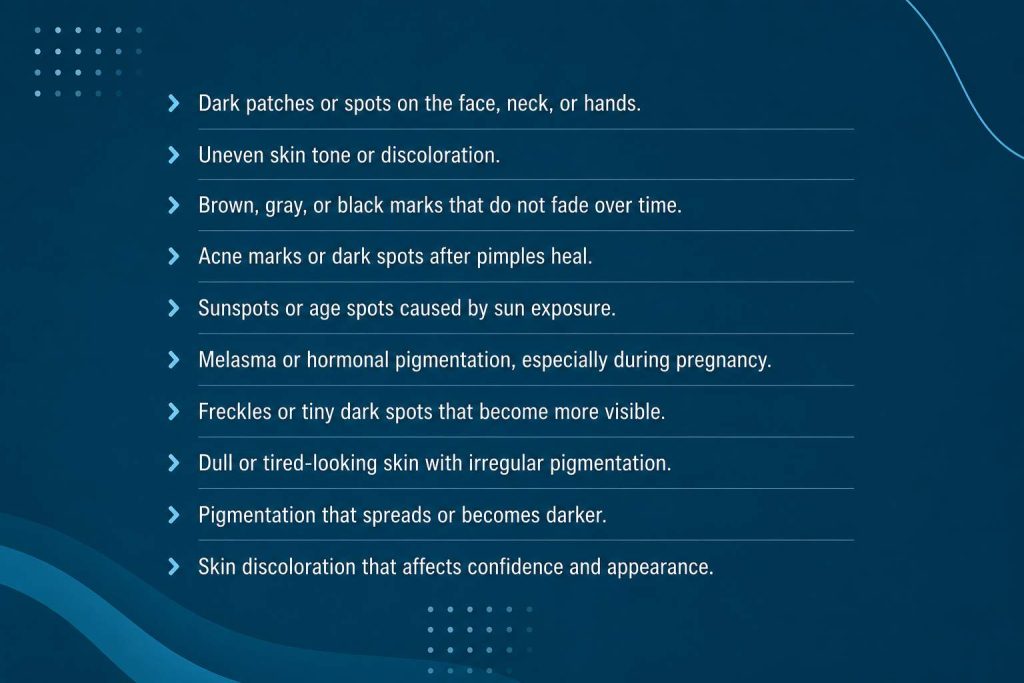
People may consider treatment if they notice:
- Dark facial patches
- Uneven skin tone
- Brown or gray discoloration
- Acne marks
- Persistent pigmentation
- Sun-induced spots
- Cosmetic concerns affecting confidence
Popular Treatments That Affect Pigmentation Treatment Recovery Time
Several procedures can improve pigmentation.
Chemical Peels
Chemical peels remove damaged outer skin layers.
Recovery generally includes:
- Mild redness
- Peeling
- Dryness
- Temporary sensitivity
Healing often occurs within several days depending on peel strength.
Laser Pigmentation Treatment
Laser treatment targets excess melanin without significantly damaging surrounding tissue.
Recovery may involve:
- Mild swelling
- Redness
- Temporary darkening before fading
- Skin sensitivity
Most individuals resume normal activities quickly with proper care.
Microneedling
Microneedling stimulates collagen while improving pigmentation.
Recovery usually includes:
- Mild redness
- Tightness
- Slight swelling
- Temporary dryness
Skin generally settles within a few days.
Intense Pulsed Light (IPL)
IPL targets pigment using broad-spectrum light.
Recovery may include:
- Slight redness
- Mild swelling
- Temporary darkening of pigmented spots
Gradual improvement continues over several weeks.
Prescription Creams
Topical medications help reduce pigmentation over time.
These may include ingredients like:
- Hydroquinone
- Azelaic acid
- Kojic acid
- Retinoids
- Vitamin C
Recovery is generally minimal because these are non-invasive treatments.
Pigmentation Treatment Recovery Time: Healing Stages
First 24 Hours
You may notice:
- Mild redness
- Warm sensation
- Slight swelling
- Skin sensitivity
Gentle skincare is important.
Days 2–5
During this stage:
- Dryness increases
- Peeling may begin
- Pigmented areas may temporarily darken
- Healing continues naturally
Avoid scratching or picking the skin.
Week 1
Most redness gradually improves.
Skin starts producing healthier new cells.
Hydration becomes increasingly important.
Weeks 2–4
Many patients observe:
- Brighter complexion
- Reduced pigmentation
- Smoother texture
- More even skin tone
Continued sun protection remains essential.
One to Three Months
Final improvements become more visible.
Collagen remodeling continues after certain procedures.
Some individuals require multiple sessions for optimal outcomes.
What to Expect During Pigmentation Treatment Recovery Time
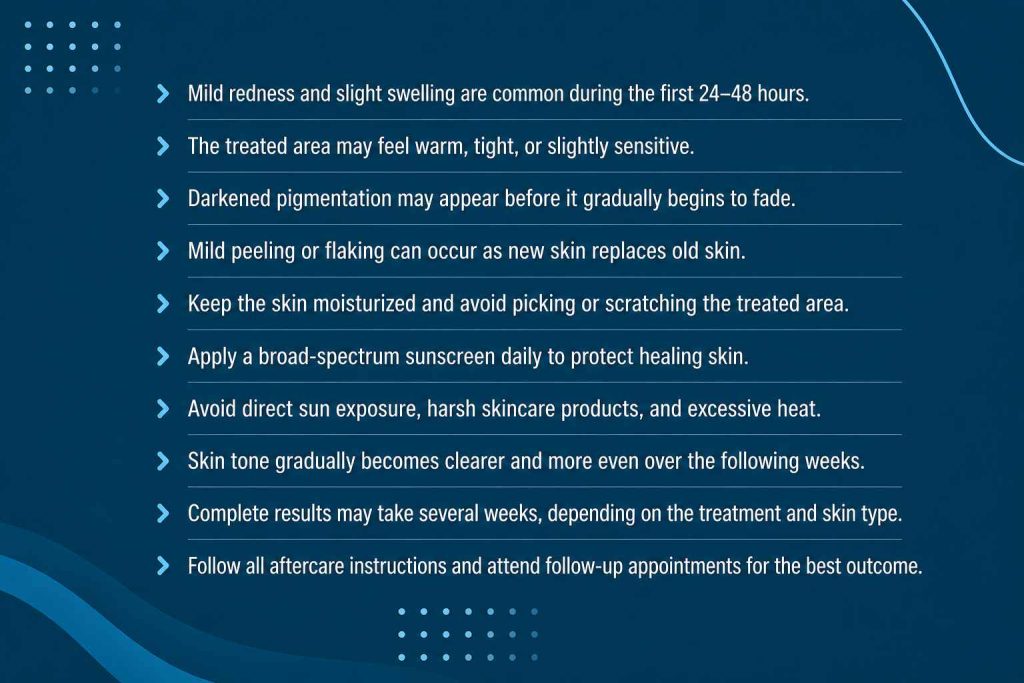
Normal recovery may include:
- Mild redness
- Dryness
- Flaking
- Temporary itching
- Tight skin
- Slight swelling
These effects usually improve gradually as healing progresses.
Benefits of Completing Recovery Properly
Following the full Pigmentation Treatment Recovery Time allows the skin to heal effectively.
Benefits include:
- Better treatment results
- Reduced pigmentation
- Improved skin texture
- Even complexion
- Lower complication risk
- Healthier skin barrier
- Longer-lasting improvements
Essential Aftercare Tips
Proper aftercare greatly influences Pigmentation Treatment Recovery Time.
Protect Your Skin from Sunlight
Daily sunscreen helps prevent pigmentation from returning.
Stay Hydrated
Drink enough water to support skin healing.
Use Gentle Cleansers
Avoid harsh scrubs during recovery.
Moisturize Regularly
Hydrated skin heals more efficiently.
Avoid Picking the Skin
Let peeling occur naturally.
Follow Treatment Instructions
Always use recommended skincare products.
Avoid Heat Exposure
Hot showers, steam rooms, and saunas may irritate healing skin.
Eat Nutritious Foods
A balanced diet supports tissue repair.
Foods That Support Skin Healing
Healthy nutrition may improve recovery.
Recommended foods include:
- Fresh fruits
- Green vegetables
- Nuts
- Seeds
- Lean protein
- Fish
- Eggs
- Whole grains
- Citrus fruits
- Berries
These provide vitamins and antioxidants that support skin repair.
Activities to Avoid During Recovery
To reduce irritation:
- Avoid direct sunlight
- Avoid swimming pools temporarily
- Avoid harsh exfoliation
- Avoid waxing treated areas
- Avoid strong cosmetic products
- Avoid excessive sweating immediately after treatment
- Avoid smoking if possible
When to Contact a Healthcare Professional
Seek medical advice if you notice:
- Severe swelling
- Increasing pain
- Fever
- Pus formation
- Persistent bleeding
- Large blisters
- Worsening redness
- Signs of infection
Prompt evaluation helps prevent complications.
Can Pigmentation Return
Yes.
Pigmentation may recur due to:
- Continued sun exposure
- Hormonal changes
- Poor skincare
- Genetics
- Incomplete treatment
- Inconsistent sunscreen use
Long-term maintenance helps preserve treatment results.
Long-Term Skin Care After Recovery
Maintain healthy skin by:
- Wearing sunscreen daily
- Following a gentle skincare routine
- Using antioxidant-rich products
- Staying hydrated
- Managing acne early
- Avoiding unnecessary skin trauma
- Scheduling follow-up assessments if recommended
These habits help maintain an even complexion.
Conclusion
Understanding Pigmentation Treatment Recovery Time helps you prepare for every stage of healing and achieve better results. Recovery depends on the treatment performed, individual skin characteristics, and proper aftercare. Most people experience gradual improvement with patience, consistent skincare, and sun protection. If you are considering pigmentation treatment in Thrissur, following professional guidance throughout Pigmentation Treatment Recovery Time can support healthy healing, minimize complications, and help maintain smoother, brighter, and more even-looking skin over time. Understanding how ultraviolet (UV) rays affect the skin is important during recovery. The American Academy of Dermatology explains effective sun protection practices to help prevent pigmentation from worsening.
Frequently Asked Questions
How long is Pigmentation Treatment Recovery Time
Recovery varies depending on the procedure, but most people recover within several days to a few weeks.
Is redness normal after pigmentation treatment
Yes. Mild redness is a common part of healing.
Can I wash my face after treatment
Usually yes, using a gentle cleanser as advised by your healthcare provider.
When can I wear makeup
This depends on the treatment performed. Follow professional recommendations before applying cosmetics.
Does peeling mean the treatment is working
Mild peeling is often a normal healing response after certain procedures.
Can I exercise during recovery
Light activity may be acceptable, but strenuous exercise should be avoided initially if advised.
Will pigmentation disappear after one treatment
Some people need multiple sessions for the best improvement.
Why do treated spots become darker first
Temporary darkening can occur before pigmented cells naturally shed.
Is sunscreen necessary after treatment
Yes. Daily sunscreen is one of the most important parts of recovery.
Can pigmentation return after successful treatment
Yes. Without proper skin protection and maintenance, pigmentation may recur.